Análisis del e interpretación del repertorio e Danza Histórica
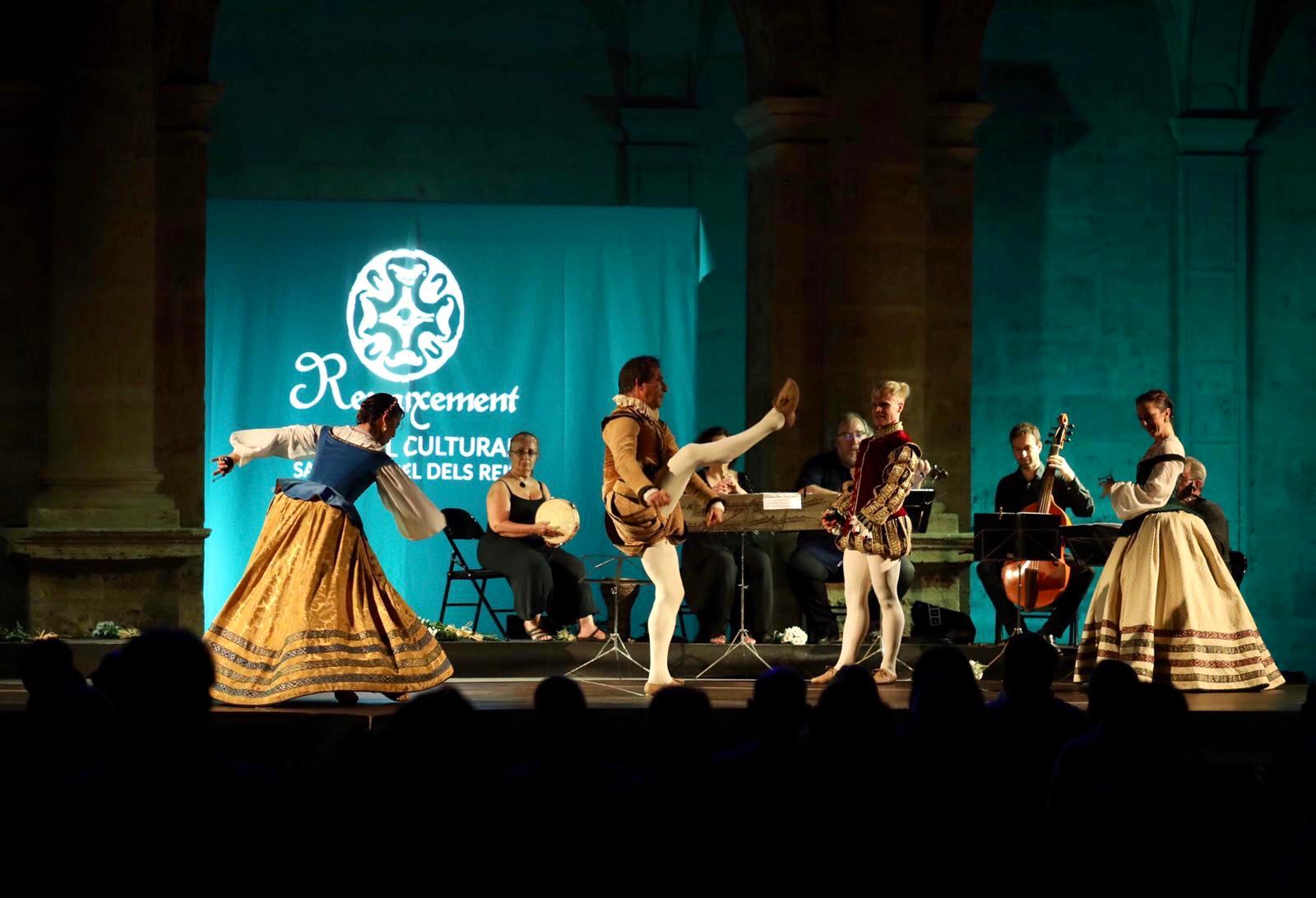
Asignatura obligatoria en el último curso (4º) para todas las especialidades e itinerarios. Asignatura teórico-práctica. Anual. 6 Créditos (180 horas). Danza renacentista, barroca, Española del Siglo de Oro, Neoclásica y prerromántica.
- Ongoing classes
- Renaissance
- Baroque
- Spanish baroque
- 19th century
- Professionals
„Mazourka, composée par St. Léon“
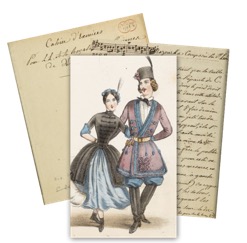
MICHEL SAINT-LÉON (1777 - 1853):
Michel Saint-Léon, Vater des berühmten Tänzers und Choreographen Arthur Saint-Léon und selbst Tänzer der Académie Royale de Musique in Paris, wirkte von 1822 - 1842 als Tanzmeister der Prinzessinnen am königlichen Hof von Württemberg. Ihnen widmete er zwischen 1829 und 1836 vier Notizbüchlein, in denen er Übungen für das Tanztraining, Theaterchoreographien und Gesellschaftstänze beschreibt.
Michel Saint-Léon komponierte viele Tänze für seine Schülerinnen wie Allemande composée pour les 3 Princesses, Mazourka, Boléros, Cracovia, Tirolienne, Guarachia danse espagnole ou nouvelle, Cachucha, Kosaque …
Die Mazurka ist ein Paartanz aus Polen, der sich im 19. Jahrhundert in den europäischen Salons großer Popularität erfreute. 1829 notiert Saint-Léon eine Mazurka in zwölf Abschnitten, ein Jahr später beschreibt er sie nochmal mit einigen technischen Variationen. Im Kurs wollen wir beide Versionen kennenlernen.
ZIELGRUPPE:
Der Kurs wendet sich an fortgeschrittene Amateurtänzer und Tanzpädagogen, die sich in diesen eleganten Tanzstil zwischen Barock und Romantik vertiefen wollen.
Die Unterrichtssprache ist Englisch.
HYGIENEKONZEPT:
Wenn die Corona-Regeln so bleiben wie im Augenblick, wird der Kurs in Hamburg unter 2-G-Bedingungen (geimpft/genesen) veranstaltet.
- Workshop
- 19th century
- Advanced
Online lecture / Cécile LAYE, Paris / Playford 1651 ... and more ! (3/3)
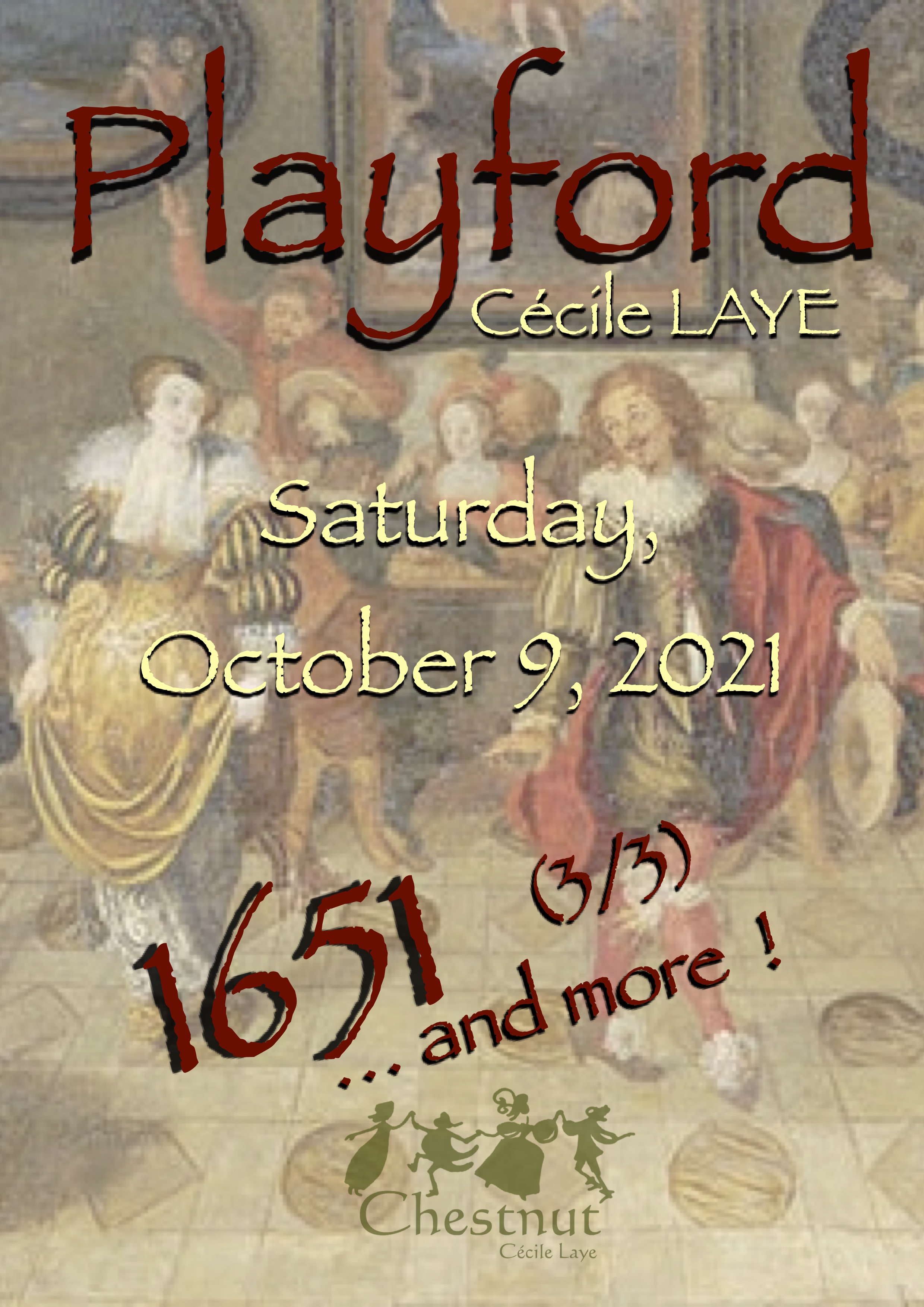
Cécile Laye's talk "Playford 1651 ... and more !" (3/3) in English
Saturday , October 9, 2021
(France : 19h30 - 20h00 / UK : 6.30 pm - 8.00 pm / USA : 1.30 pm - 3.00 pm East ST / USA : 10.30 am - 12.00 am Pacific ST)
---- > Registration
N.B.: registration form is in French BUT if you don't speak the language of Molière, DON'T PANIC ! We provide you a Registration assistance in English over here.
Please note: registration will be definitively closed on October 08, 2021 at 22:00 (Paris time)
Programme
- In this last talk (3/3), I would like to mention the Revival movement for dance and its head figure for English Country dancing, Cecil Sharp of course but nevertheless without forgetting Mary Neal.
- In the 2nd talk (2/3) on the 17th century English Country Dances repertoire, using many videos filmed with the support of the French National Dance Center, I have explored, starting with the Measure, the basic structures of the John Playford dances.
- In the First (1/3) in this serie of three talks devoted to the repertoire of 17th Century English figure dances and its reference text, After the generalities of use and the reminder of the historical context, I proposed to guide you step by step through the English Dancing Master (Generalities, Historical background, False leads, Let's open the book: orientation, numbering, proper and improper, music, ...)

Cécile LAYE is CHESTNUT’s teaching and artistic director.
She studied early dance in England with the Dolmetsch Historical Dance Society, Nonsuch History and Dance and EFDSS (English folk Dance and Song Society). She worked in particular under such famed teachers and researchers as Anne Daye, Anne Cottis, Peggy Dixon, Ethyl Anderson, Marjorie Fennessy, Tom Cook and Alan Davies. In France she studied with Francine Lancelot, Andréa Francalancci and Barbara Sparti.
She founds AMARILLIS, a dance company meaning to bring to the public figure dances of the Stuarts’ time and the English inheritance, as well as some aspects of history and literature, with the collaboration of musicians and singers. CHESTNUT takes over in 1998. CHESTNUT took over its predecessor’s artistic activities (creating dance and theatre shows), its teaching (preparing dancers for Balls through a rich program of workshops and classes) and its publication ones (CDs, dance descriptions, articles on Playford and modern dances).
Over the years, Cécile LAYE has build up a strong experience as a dancing master and ball caller (French Renaissance balls/ English figure dances balls, or a mixture of both). She can pass on her taste for and pleasure in elegant dancing to beginners as well as seasoned dancers.
Besides her activities in the field of dancing, Cécile Laye studied dramatic art and staging, graduating at Cours Florent. She also graduated at Eva Ruchpaul’s Yoga Institute and the Paris school of Gestalt-therapy. She played Shakespeare, Molière and Marivaux in Paris and elsewhere in France and takes part in creating new plays and shows, for children in particular.
She draws on both sides of her extensive training, physical and artistic, to develop her teaching method.
Her constant aim is to understand the needs of a given group and of each person making up the group, to build up a class so that each person gradually understands the dance, becomes aware of his/her body and its expressive capacities, be it during a lesson, a ball, or on stage.
Cécile Laye's interview by Sandra Stevens - Histoire de bal
French version of this interview on Histoire de bal
- Conference
- Playford
- 19th century
- Regency
- mixed
- All levels
Società di Danza Firenze
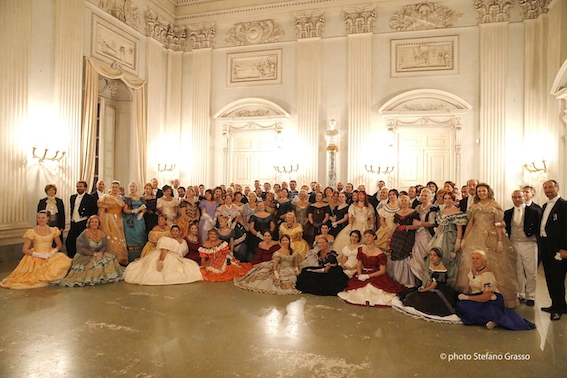
Società di Danza Firenze is a cultural association active in Firenze from 2012 and affiliated to the National Federation Società di Danza, founded in Bologna in 1991 and directed by Fabio Mòllica.
Società di Danza promotes historical research, diffusion and practice on Nineteenth Century and Historical dances. The society aims at reconstructing a dance system belonging to the European tradition. 19th century dances include quadrilles, country dances, waltzes, polkas and mazurkas, and Scottish dances.
We aim at researching the artistic technique that in the Nineteenth Century made these dances especially important.
For a curriculum of Società di Danza see: www.societadidanza.it/soc_dance.html and http://www.societadidanza.it/cv.sdd.ing.html
Società di Danza Firenze, directed by S. Balsamo, develop the project of Società di Danza in the Firenze area and
- organizes countinuous courses of 19th century dance and Scottish country dance
- organizes special seminars of historical dance
- organizes 19th century Grand Ball reconstructions in historical villas and palaces
- promotes the collaboration with cultural, musical association, cultural institutions and local administration
- promotes courses of historical dance for young and students also in collaboration with educational institutes
- collaborates with Società di Danza groups and associations for organization and participation to national events
More information are available at www.societadidanza.it/homefirenze.html
and via mail at firenze@societadidanza.it
- Dance group
- Performer
- 19th century
Società di Danza Livornese
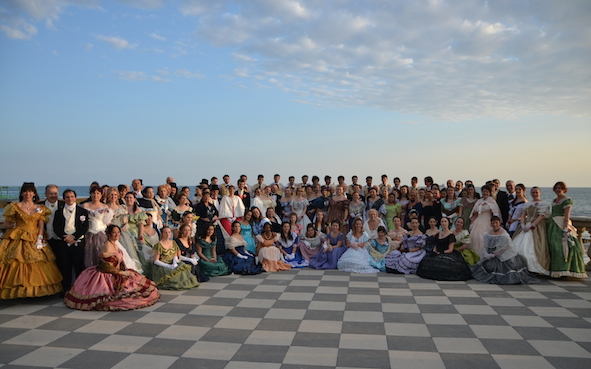
Società di Danza Livornsese is a cultural association no profit founded in Livorno in 1997 and affiliated to the National Federation Società di Danza, founded in Bologna in 1991 and directed by Fabio Mòllica.
Società di Danza Livornese promotes historical research, diffusion and practice on Nineteenth Century and Historical dances. The society aims at reconstructing a dance system belonging to the European tradition. 19th century dances include quadrilles, country dances, waltzes, polkas and mazurkas, and Scottish dances.
We aim at researching the artistic technique that in the Nineteenth Century made these dances especially important for the dancing masters and not only mass enjoyment.
Società di Danza Circolo Livornese, directed by S. Balsamo
- organizes countinuous courses of 19th century dance and Scottish country dance
- organizes special courses of historial dance for students in collaboration with city's high school
- seminars of historical dance
- Grand Ball reconstructions
- prootes the collaboration with cultural, musical, sing association, and local administration
- collaborates with ' Comitato Livornese per la Promozione dei Valori Risorgimentali' for events to celebrate history and social values of Risorgimento in Livorno and in Italy
- collaborates with Società di Danza groups and associaitons and partipates to national events
- organizes tea dances and Scottish balls with live music
More information are available at www.societadidanza.it/homelivorno.html
and vi amail at livorno@societadidanza.it
- Dance group
- Performer
- 19th century
26th SUMMER SCHOOL OF SOCIAL DANCES OF EUROPEAN TRADITION - 19th Century dance
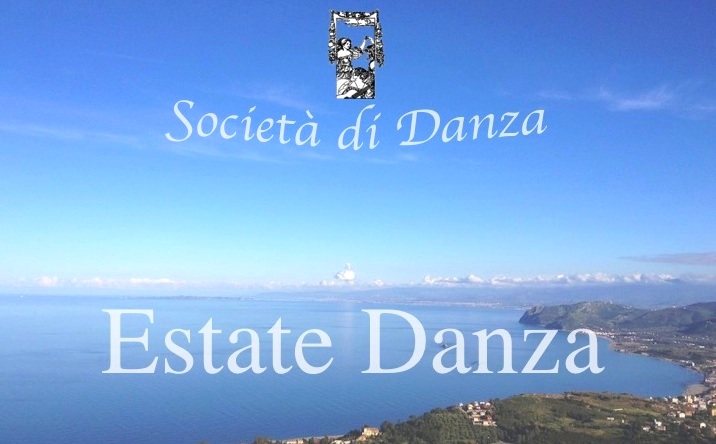
26th Summer School Società di Danza
July 17-24, August, 14-21, 21-28, 2021
Sicily, Villa Massimo,
Landro di Gioiosa Marea (Messina) Italy
Social dance of European tradition Società di Danza
Director: Fabio Mòllica
Stage of 19th century dance.
Stage for intermediate (July and August 14-21) and advanced (August 21-28).
Quadrille, Waltz, Polka, Mazurka, March and Scottish country dances.
The traditional Summer School of Società di Danza will be held in Villa Massimo, Landro di Gioiosa Marea.
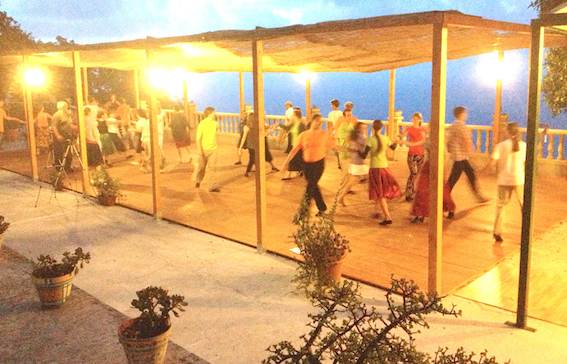
Classes in the afternoon and dancing evening.
Free time to enjoy the marvellous sea and cultural tourism.
We will study 19th century dance: waltz, quadrille, polka, mazurka and Scottish Country Dance.
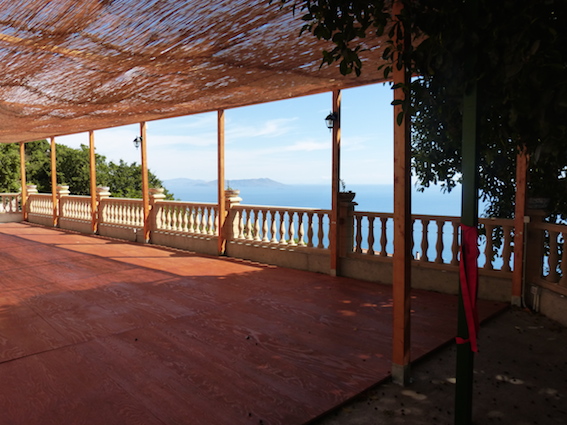
Classes are in large open air covered dance space with a wooden floor and the view on the gulf and the Eolie's Islands.
Some evenings will be devoted to dancing parties.
Stage with dance, technique and repertoire.
Weeks of holiday and dance.
For further information and registration:
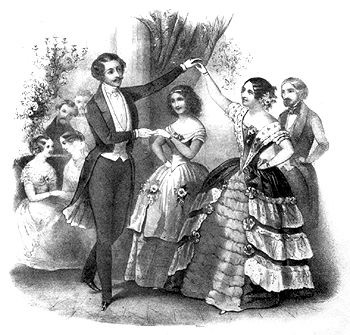
- Summer School
- 19th century
- Intermediates
- Advanced
Historische Tänze in der Kaiserstadt Bad Ischl
Liebe Freunde, liebe Tänzer,
Ein neues Projekt wird aus der Wiege gehoben! Neu ist der Ort, die Jahreszeit, der Veranstalter, das Konzept und der Flyer[1]. Altbewährt sind vor allem die Schätze des Tanzrepertoires, unsere bewährte Ballmusik und meine Wenigkeit.
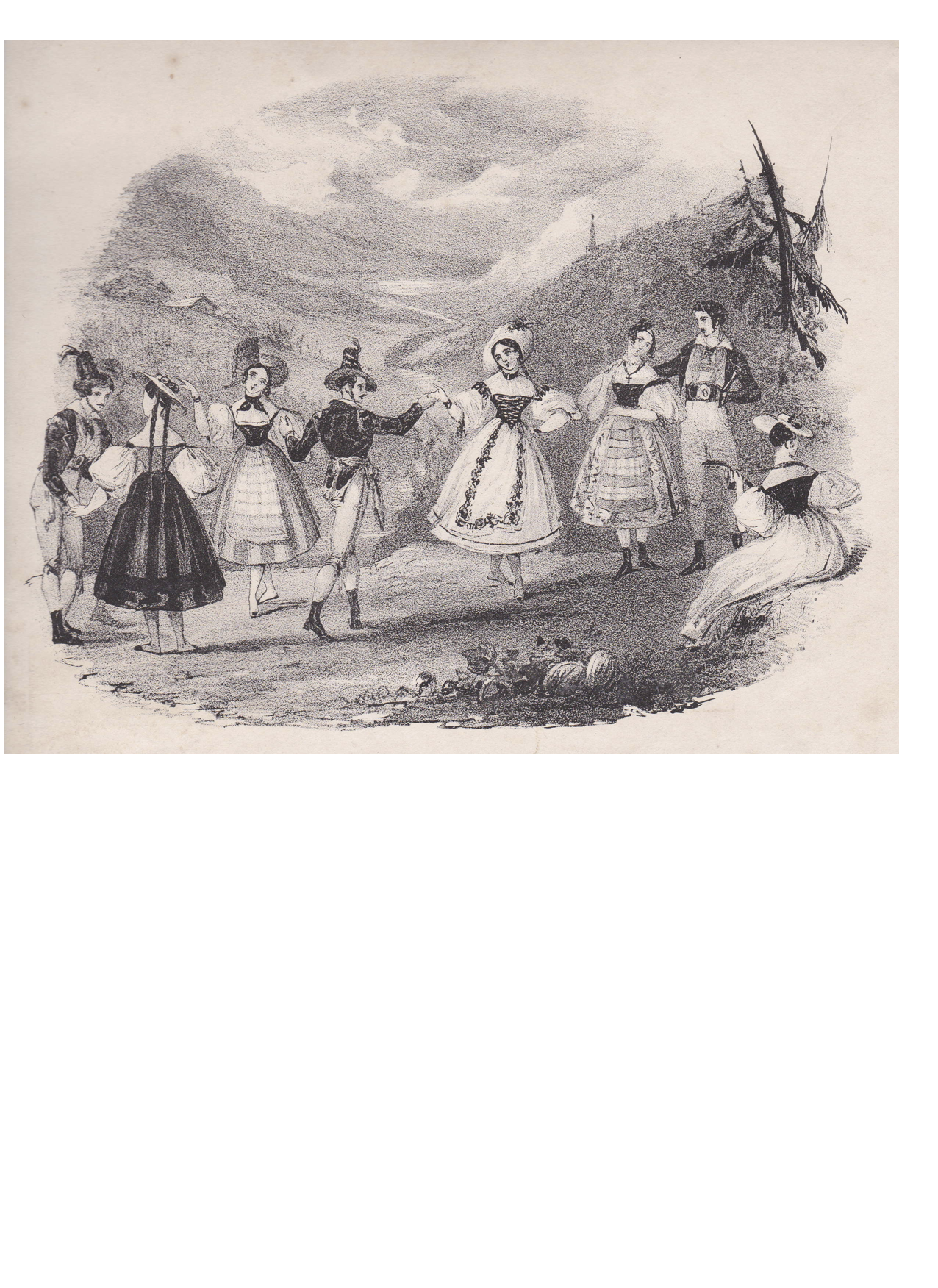
Bad Ischl war die Sommerresidenz des Kaiserpaares Franz Joseph I und Sisi mit der zugehörigen gesellschaftlichen und künstlerischen Entourage. Rund um den 18. August wurde und wird der Geburtstag des Monarchen gefeiert. Wir können Teil dieser Ereignisse sein. In teils vertrauter Runde möchte ich Ausschnitte von den Highlights der Wiener Tanzwoche „Es muß ein Stück vom Himmel sein“ mit Euch genießen:
Wir huldigen der Landschaft mit einer Kostprobe aus der Alpen=Quadrille und gedenken der Lieblingstochter von Sisi, die in Bad Ischl den Bund fürs Leben geschlossen hat, mit Teilen der Valerie-Mazur-Quadrille, dazu passend die Cotillon-Quadrille von der Bekanntschaft bis zur Hochzeit. Auch auf einen Teil vom Kör möchte ich nicht verzichten.
Auf dem Ball am Samstag Abend dürfen natürlich unsere Fixsterne L’Alliance, Sir Roger und Quadrille française neben Walzer, Polka und Galopp nicht fehlen.
Wer sich am Sonntag noch nicht von Bad Ischl und den Mittänzern trennen möchte, kann am Montag und Dienstag bei Aufführungen der genannten Tänze mitwirken.
· Anmeldung für den Tanzkurs an die Tanzschule Tanz & More. https://www.tanzandmore.at
· Buchung von Tanzkurs samt Unterkunftsoptionen: Tourismusverband Bad Ischl Trinkhalle/Auböckplatz 5 | 4820 Bad Ischl Telefon +43-6132-27757-0 office@badischl.at | www.badischl.at
Eure Hannelore Unfried
[1] https://www.tanzen-im-urlaub.eu/images/flyer/Flyer2021/TM_HistoricheTnz…
xxxxxxxxxxxxxxxxxxxxxxxxxxxxxxxxxxxxxxxxxxxxxxxxxxxxxxxxxxxxxxxxxxxxxxx
Dear friends, dear dancers,
A new project is born! The location, the season, the organizer, the concept and the flyer[1] are new; well-tried are the treasures of our dance repertory, the musicians at the ball and my proven reconstructions.
Bad Ischl was the summer residence of the imperial couple Franz Joseph I and Sisi with their social and artistic entourage. The monarch's birthday was and is celebrated around August 18th. We can be part of these events. Together with you I would like to enjoy Best of the Vienna Dance Week "My life is full of love and joy":
As a tribute to the landscape a taste of the Alpen = Quadrille; in honor of Sisi's favorite daughter parts of the Valerie Mazur Quadrille, who took the marriage vows in Bad Ischl and the perfect match of the Cotillon quadrille leading from the acquaintance to the wedding. I also don't want to do without parts of the Kör. At least parts of this ambitious programm will be danced at the ball on Saturday evening as well as our favorits L’Alliance, Sir Roger, Quadrille française, Waltz, Polka and Gallop.
If you don't want to part with Bad Ischl and the fellow dancers on Sunday, you can perform the rehearsed dances on Monday and Tuesday.
· Registration for the dance course at the dance school Tanz & More. https://www.tanzandmore.at
· Registration for the dance course including options of accomodation: Tourismusverband Bad Ischl Trinkhalle/Auböckplatz 5 | 4820 Bad Ischl Telefon +43-6132-27757-0 office@badischl.at | www.badischl.at
Yours sincerely Hannelore Unfried
[1] https://www.tanzen-im-urlaub.eu/images/flyer/Flyer2021/TM_HistoricheTnz…
- Workshop
- Performance
- Ball
- 19th century
- All levels
Höfischer Tanz
- Teacher
- Baroque
- Playford
- 19th century
- Regency
HISTORICAL DANCE SUMMER COURSES 2021 / July, 27-31, Paris / English Country Dances and Baroque Dances / Cécile Laye and Pierre-François Dollé
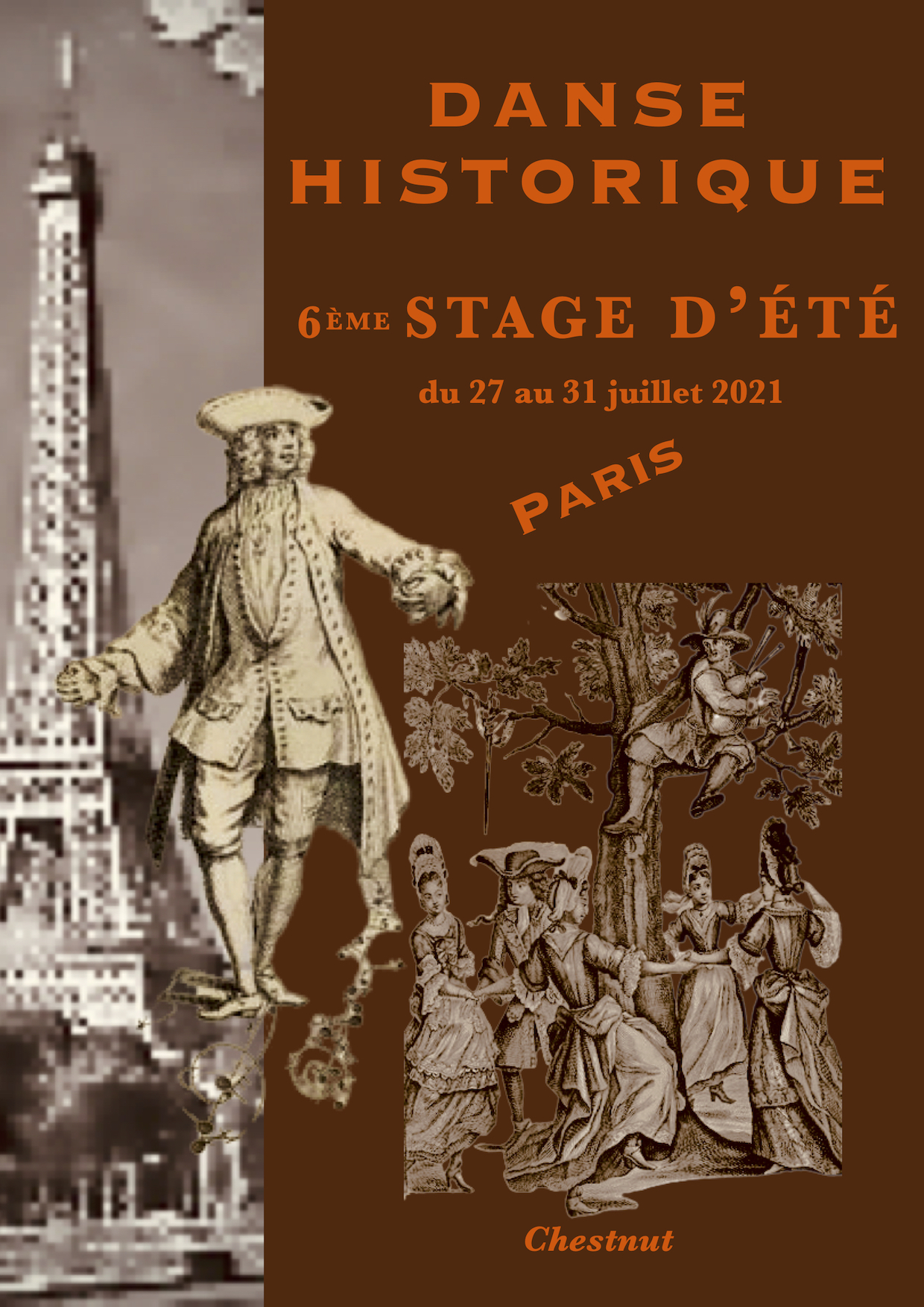
Due to the current health crisis and despite our attachment to the Tapis Vert in Normandy, the 6th edition of the summer courses of historical dance organized by chestnut in collaboration with Danses au (Pas)sé et HéliosKine will take place this year in Paris.
A good opportunity to experience Paris differently ! ....
This 6th edition retains all the advantages that make the success of these Summer Courses for 5 years! :
- 2 courses, 2 repertoires, 3 workshops
- the possibility to build your program according to your tastes and your energy. According to your wishes, you can concoct an intensive program (with a maximum of 6 hours of lessons/ day) or alternate in your day the moments of workshop with moments of relaxation or visit in Paris or its surroundings.
- studios adapted to the practice of dance
- a training place close to many cultural sites (Micadanses studios are close to the City Hall)
Please find all détails on chestnut website

2. Schedule
4. Instructors
5. Location
6. Fees
8. Registration
9. Contact
10. Flyers
PERIODS and CONTENTS
1. COURSE n° 1 from Saturday 17 to Wednesday 21 July
- 1. English Country Dances / Cécile Laye (Chestnut)
- 2. Baroque dances / Irène Feste (Danses au (Pas)sé)
2. COURSE n° 2 from Tuesday 27 July to Saturday 31 July
- 1. English Country Dances / Cécile Laye (Chestnut)
- 2. Baroque dances / Pierre-François Dollé (HéliosKine)
WORSHOPS' DESCRIPTION

COURSE n° 1 from Saturday 17 to Wednesday 21 July
1. English Country Dances (3 hours / day) / Cécile Laye
The workshop will again give us the opportunity to celebrate the incredible richness of the repertoire of English figure dances which have contributed so much to the history of ancient dance and which have reinvented themselves regularly from the 16th century to the present day.Programme: "Homonymous dances"
They are dances using the same music for different choreographies from ancient and modern repertoire: Le Basque (Cécile Laye); Kneeland Romp (Gary Roodman);Virgin Frolick (The Dancing Master, 1710);Hand to hand (Gary Roodman); The Merry Milkmaids (The Dancing Master, 1651 and 1728 versions) ; A trip to Macclesfield (Brian Wedgbury); An Enchanted Place (Antony Heywood); two versions of Drapers Gardent (The Dancing Master, 1706) including one in menuet steps.
and / or
2. Baroque dances (3 hours / day) / Irène Feste
Programme: "Unique choreographic scores"
- Entrée de l’Amiral de France en 1756 par M. Dupré (FL/Ms20.1/01)
- La Nouvelle Bourrée des Princesses par M. Rameau (FL/1728.1/14)
The singularity of these scores comes from the fact that they are the only dances choreographed, respectively by M. Dupré and by Pierre Rameau, which have reached us to this day.
Each of these choreographic scores is in a collection to learn the art of writing or describing dance.
After Raoul-Auger Feuillet’s “Chorégraphie….” in 1700, other dance masters tried to write a method.
La Bourrée des Princesses by Mr. Rameau, a dance for a man and a woman, is featured in the “Abrégé de la nouvelle Méthode dans l’Art d’écrire ou de tracer toutes sortes de Danses de Ville…” , by Pierre Rameau, published in 1728.
The Entrée de l'Amiral de France by M. Dupré, is described and noted in the “ Méthode pour apprendre de soi-même la Chorégraphie, ou l’Art de décrire…” , de Dupré, Maître à danser au Mans, published in 1757.
This is a ballet entrance for a man, quite approachable for a woman!
We will also see together that there is a surprise.

COURSE n° 2 from Tuesday 27 July to Saturday 31 July
1. English Country Dances (3 hours / day) / Cécile Laye
The workshop will again give us the opportunity to celebrate the incredible richness of the repertoire of English figure dances which have contributed so much to the history of ancient dance and which have reinvented themselves regularly from the 16th century to the present day.Programme: "From the Grand Square to the Square of Mahony"
From the old and modern directories, we will work on the evolution of a figure from the 17th century to the present day.The program will allow dancers to work with different aesthetics and proposals. The following dances will be included: Hunsdon House (The Dancing Master, 1670); Little Hunsdon (Pat Shaw); Les Lanciers (Alexander Strathy version, 1822); La Beaudri (La Cuisse, 1762);Cupid’s Garden (Marjorie Heffer); Play to win (Antony Heywood); Mary K (Gary Roodman)
and / or
2. Baroque dances (3 hours / day) / Pierre-François Dollé
Programme: "Les Caractères de la danse, fantaisie musicale de Jean-Fery Rebel"
After a gentle warm-up, mixing a moment of relaxation and body reconnection with progressive stretches, we will tackle together the technique of the «Belle Dance», returning to the fundamentals of all the steps necessary for the easy practice of this technique.
In a second time, we will explore the famous «Caractères de la danse», musical fantasy of Jean-Fery Rebel, a kind of exercise of style, which unfolds, like a thread of Ariane, most of the dances of ball and theatre in use in the first quarter of the eighteenth century.
After a prelude allowing the customary reverences, we will have pleasure to dance the Courante, the Menuet and the Bourrée, ball dances par excellence, then to travel in a lively and dense Chaconne, a Sarabande, a Gigue, a Rigaudon, a Passepied, a Lourre, a pastoral Musette to finish with an Italian Sonata, a sort of window open to a new fashion to come
These Characters of Dance were performed by many artists in the 18th century, including the dancers Marie Sallé and Marie-Anne de Camargo, who choreographed and danced them on the French and English stages in particular.
When Marie Sallé moved the audience with her sensitivity and charm, the Camargo impressed the Parisian public with its mastered technique, its jumps and its chats!
It is this whole range of intentions and styles that, in a choreography created by myself, in an idea of progression, we will study together, for the pleasure of dance, movement and the emotions that dance gives us.
Let’s dive together into these famous «characters», mythical piece if any!
INSTRUCTORS
Cécile LAYE
Cécile Laye is CHESTNUT’s teaching and artistic director. She studied old dance forms in England with the Dolmetsch Historical Dance Society, Nonsuch History and Dance and EFDSS (English folk Dance and Song Society). She worked in particular under such famed teachers and researchers as Anne Daye, Anne Cottis, Peggy Dixon, Ethyl Anderson, Marjorie Fennessy, Tom Cook and Alan Davies. In France she studied with Francine Lancelot, Andréa Francalancci and Barbara Sparti. At the end of the eighties, she founded AMARILLIS, a dance company meaning to bring to the public figure dances of the Stuarts’ time and the English inheritance, as well as some aspects of history and literature, with the collaboration of musicians and singers. AMARILLIS was replaced by CHESTNUT in 1998. CHESTNUT took over its predecessor’s artistic activities (creating dance and theatre shows), its teaching (preparing dancers for Balls through a rich program of workshops and classes) and its publication ones (CDs, dance descriptions, articles on Playford and modern dances). Over the years, Cécile LAYE has build up a strong experience as a dancing master and ball caller (French Renaissance balls/ English figure dances balls, or a mixture of both). She can pass on her taste for and pleasure in elegant dancing to beginners as well as seasoned dancers. Besides her activities in the field of dancing, Cécile Laye studied dramatic art and staging, graduating at Cours Florent. She also graduated at Eva Ruchpaul’s Yoga Institute and the Paris school of Gestalt-therapy. She played Shakespeare, Molière and Marivaux in Paris and elsewhere in France and takes part in creating new plays and shows, for children in particular. She draws on both sides of her extensive training, physical and artistic, to develop her teaching method. Her constant aim is to understand the needs of a given group and of each person making up the group, to build up a class so that each person gradually understands the dance, becomes aware of his/her body and its expressive capacities, be it during a lesson, a ball, or on stage.

Irène FESTE
From an early age, Irène Feste trained in classical dance with J. Pelletier, Y. Meyer, S. Prince and M. Denard.After a Master Engineer in Telecommunications and Networks and her Diploma of teacher of Classical Dance, she discovered Belle Dance and Baroque Eloquence awith the Cie L'Eclat des Muses de C. Bayle (Le Ballet de la Merlaison).She was introduced to the Italian Renaissance style with B. Sparti and G. Giordano. She is a performer in France and at the International for: Divertimenty, Les Corps Eloquents, Le Baroque Nomade, La Tempesta, Doulce Mémoire, Il Ballo and is choreographer-interpreter of Cie Fantaisies Baroques, co-founded with P.-F. Dollé (Danceries en Fables, L'Ile des Esclaves, 1717: Les Honneurs faits au Tsar, Métamorphoses - le Chat Botté...) In 2013 and 2019, she choreographed for director Pascal Ruiz: Le Masque d'Or, Le Secret des Mémoires. In 2015, she participated in the BBC’s The King who invented Ballet, for the tercentenary of the death of Louis XIV. Artist performer, choreographer and dancing master, through her research (Centre National de la Danse - Aide à la Recherche et au Patrimoine en Danse 2013,  2014, 2016, 2020), she contributes to the diffusion of ancient dance, from the sixteenth to the nineteenth centuries, during workshops in France and Europe, pedagogical and choreographic actions in schools and conservatories.
Since 2020, she has been choreographer and performer of the company Danses au (Pas)sé(Le Ballet des 5 Sens, a young audience performance).

Pierre-François DOLLÉ
Pierre-François Dollé, after a multidisciplinary training at the Balettakademie in Cologne, he danced very contrasting repertoires within different companies which led him to work, among others, in Germany and England. Back in France, he obtained his DE as a dance teacher and crossed paths with Christine Bayle, with whom he created many ballets. He also dances for the company l'Eventail, and works with many choreographers, directors and conductors of the baroque stage. In various styles, he now has a sustained activity of choreographer, notably in collaboration with the company Cracovia Danza, the Arts Florissants or for productions in Japan, United States and Germany. He founded Cie Fantaisies Baroques, with Irène Feste, in 2007. In 2013, 2014, 2016 and 2020, he obtained the Aid for Research and Heritage in Dance from the Centre National de la Danse for research on dances from the early 17th century and on Empire and pre-Romantic styles.
All our instructors are PRO DA members :

LOCATION
Located on rue Geoffroy l'Asnier in the 4th arrondissement of Paris, Micadanses studios are equipped and made available to amateur and professional dancers to host rehearsals, workshops, workshops and other meetings around dance.
FEES
Teaching Fees (€/pers.) :
1 workshop (15 hours) : 195 €
2 workshops (30 hours) : 360 €
HOW TO GET THERE
Micadanses studios are located at different numbers on Geoffroy l'Asnier Street. Numbers and access codes will be communicated to you later after your registration.
REGISTRATION
Registration confirmation is confirmed by returning the registration form together with the amount of the deposit.
Registration form COURSE n° 1 (July, 17 to 21): Course n° 1 Registration Form
Registration form COURSE n° 2 (July, 27 to 31): Course n° 2 Registration Form
CONTACT
contact@chestnut.fr ou 0033 660 222 321
FLYERS
- Workshop
- Summer School
- Tudor
- Baroque
- Playford
- 19th century
- Quadrilles
- Regency
- mixed
- All levels
HISTORICAL DANCE SUMMER COURSES 2021 / July, 17-21, Paris / English Country Dances and Baroque Dances / Cécile Laye and Irène Feste
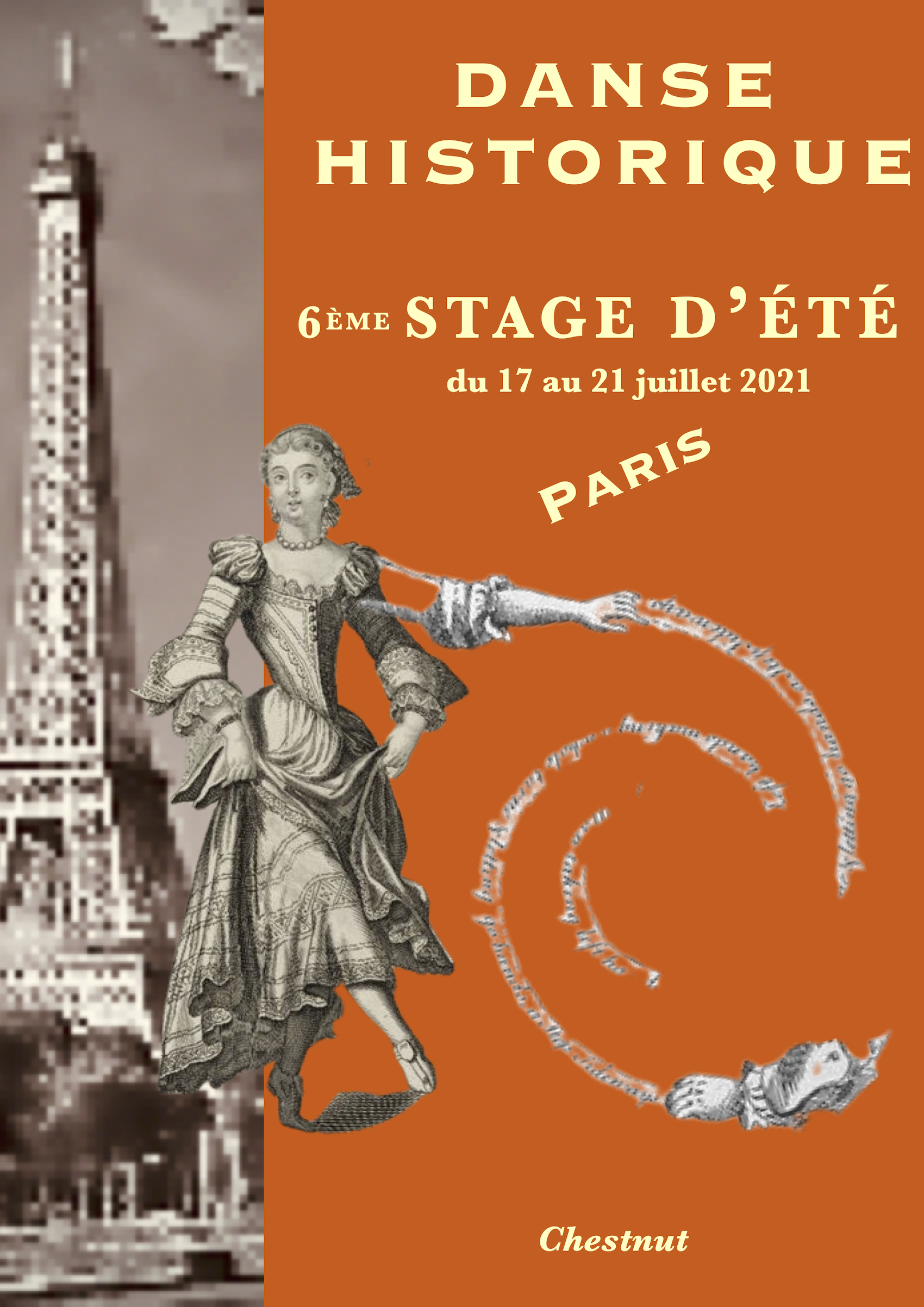
Due to the current health crisis and despite our attachment to the Tapis Vert in Normandy and the welcome of Jean Galodé, its director, the 6th edition of the summer courses of historical dance organized by CHESTNUT will take place this year in Paris.
A good opportunity to experience Paris differently ! ....
This 6th edition retains all the advantages that make the success of these Summer Courses for 5 years! :
- 2 courses, 2 repertoires, 3 workshops
- the possibility to build your program according to your tastes and your energy. According to your wishes, you can concoct an intensive program (with a maximum of 6 hours of lessons/ day) or alternate in your day the moments of workshop with moments of relaxation or visit in Paris or its surroundings.
- studios adapted to the practice of dance
- a training place close to many cultural sites (Micadanses studios are close to the City Hall)
Please find all détails on chestnut website
2. Schedule
4. Instructors
5. Location
6. Fees
8. Registration
9. Contact
10. Flyers
PERIODS and CONTENTS
1. COURSE n° 1 from Saturday 17 to Wednesday 21 July
- 1. English Country Dances / Cécile Laye (Chestnut)
- 2. Baroque dances / Irène Feste (Danses au (Pas)sé)
2. COURSE n° 2 from Tuesday 27 July to Saturday 31 July
- 1. English Country Dances / Cécile Laye (Chestnut)
- 2. Baroque dances / Pierre-François Dollé (HéliosKine)
WORSHOPS' DESCRIPTION
COURSE n° 1 from Saturday 17 to Wednesday 21 July
1. English Country Dances (3 hours / day) / Cécile Laye
The workshop will again give us the opportunity to celebrate the incredible richness of the repertoire of English figure dances which have contributed so much to the history of ancient dance and which have reinvented themselves regularly from the 16th century to the present day.Programme: "Homonymous dances"
They are dances using the same music for different choreographies from ancient and modern repertoire: Le Basque (Cécile Laye); Kneeland Romp (Gary Roodman);Virgin Frolick (The Dancing Master, 1710);Hand to hand (Gary Roodman); The Merry Milkmaids (The Dancing Master, 1651 and 1728 versions) ; A trip to Macclesfield (Brian Wedgbury); An Enchanted Place (Antony Heywood); two versions of Drapers Gardent (The Dancing Master, 1706) including one in menuet steps.
and / or
2. Baroque dances (3 hours / day) / Irène Feste
Programme: "Unique choreographic scores"
- Entrée de l’Amiral de France en 1756 par M. Dupré (FL/Ms20.1/01)
- La Nouvelle Bourrée des Princesses par M. Rameau (FL/1728.1/14)
The singularity of these scores comes from the fact that they are the only dances choreographed, respectively by M. Dupré and by Pierre Rameau, which have reached us to this day.
Each of these choreographic scores is in a collection to learn the art of writing or describing dance.
After Raoul-Auger Feuillet’s “Chorégraphie….” in 1700, other dance masters tried to write a method.
La Bourrée des Princesses by Mr. Rameau, a dance for a man and a woman, is featured in the “Abrégé de la nouvelle Méthode dans l’Art d’écrire ou de tracer toutes sortes de Danses de Ville…” , by Pierre Rameau, published in 1728.
The Entrée de l'Amiral de France by M. Dupré, is described and noted in the “ Méthode pour apprendre de soi-même la Chorégraphie, ou l’Art de décrire…” , de Dupré, Maître à danser au Mans, published in 1757.
This is a ballet entrance for a man, quite approachable for a woman!
We will also see together that there is a surprise.
COURSE n° 2 from Tuesday 27 July to Saturday 31 July
1. English Country Dances (3 hours / day) / Cécile Laye
The workshop will again give us the opportunity to celebrate the incredible richness of the repertoire of English figure dances which have contributed so much to the history of ancient dance and which have reinvented themselves regularly from the 16th century to the present day.Programme: "From the Grand Square to the Square of Mahony"
From the old and modern directories, we will work on the evolution of a figure from the 17th century to the present day.The program will allow dancers to work with different aesthetics and proposals. The following dances will be included: Hunsdon House (The Dancing Master, 1670); Little Hunsdon (Pat Shaw); Les Lanciers (Alexander Strathy version, 1822); La Beaudri (La Cuisse, 1762);Cupid’s Garden (Marjorie Heffer); Play to win (Antony Heywood); Mary K (Gary Roodman)
and / or
2. Baroque dances (3 hours / day) / Pierre-François Dollé
Programme: "Les Caractères de la danse, fantaisie musicale de Jean-Fery Rebel"
After a gentle warm-up, mixing a moment of relaxation and body reconnection with progressive stretches, we will tackle together the technique of the «Belle Dance», returning to the fundamentals of all the steps necessary for the easy practice of this technique.
In a second time, we will explore the famous «Caractères de la danse», musical fantasy of Jean-Fery Rebel, a kind of exercise of style, which unfolds, like a thread of Ariane, most of the dances of ball and theatre in use in the first quarter of the eighteenth century.
After a prelude allowing the customary reverences, we will have pleasure to dance the Courante, the Menuet and the Bourrée, ball dances par excellence, then to travel in a lively and dense Chaconne, a Sarabande, a Gigue, a Rigaudon, a Passepied, a Lourre, a pastoral Musette to finish with an Italian Sonata, a sort of window open to a new fashion to come
These Characters of Dance were performed by many artists in the 18th century, including the dancers Marie Sallé and Marie-Anne de Camargo, who choreographed and danced them on the French and English stages in particular.
When Marie Sallé moved the audience with her sensitivity and charm, the Camargo impressed the Parisian public with its mastered technique, its jumps and its chats!
It is this whole range of intentions and styles that, in a choreography created by myself, in an idea of progression, we will study together, for the pleasure of dance, movement and the emotions that dance gives us.
Let’s dive together into these famous «characters», mythical piece if any!
INSTRUCTORS
Cécile LAYE
Cécile Laye is CHESTNUT’s teaching and artistic director. She studied old dance forms in England with the Dolmetsch Historical Dance Society, Nonsuch History and Dance and EFDSS (English folk Dance and Song Society). She worked in particular under such famed teachers and researchers as Anne Daye, Anne Cottis, Peggy Dixon, Ethyl Anderson, Marjorie Fennessy, Tom Cook and Alan Davies. In France she studied with Francine Lancelot, Andréa Francalancci and Barbara Sparti. At the end of the eighties, she founded AMARILLIS, a dance company meaning to bring to the public figure dances of the Stuarts’ time and the English inheritance, as well as some aspects of history and literature, with the collaboration of musicians and singers. AMARILLIS was replaced by CHESTNUT in 1998. CHESTNUT took over its predecessor’s artistic activities (creating dance and theatre shows), its teaching (preparing dancers for Balls through a rich program of workshops and classes) and its publication ones (CDs, dance descriptions, articles on Playford and modern dances). Over the years, Cécile LAYE has build up a strong experience as a dancing master and ball caller (French Renaissance balls/ English figure dances balls, or a mixture of both). She can pass on her taste for and pleasure in elegant dancing to beginners as well as seasoned dancers. Besides her activities in the field of dancing, Cécile Laye studied dramatic art and staging, graduating at Cours Florent. She also graduated at Eva Ruchpaul’s Yoga Institute and the Paris school of Gestalt-therapy. She played Shakespeare, Molière and Marivaux in Paris and elsewhere in France and takes part in creating new plays and shows, for children in particular. She draws on both sides of her extensive training, physical and artistic, to develop her teaching method. Her constant aim is to understand the needs of a given group and of each person making up the group, to build up a class so that each person gradually understands the dance, becomes aware of his/her body and its expressive capacities, be it during a lesson, a ball, or on stage.
Irène FESTE
From an early age, Irène Feste trained in classical dance with J. Pelletier, Y. Meyer, S. Prince and M. Denard.After a Master Engineer in Telecommunications and Networks and her Diploma of teacher of Classical Dance, she discovered Belle Dance and Baroque Eloquence awith the Cie L'Eclat des Muses de C. Bayle (Le Ballet de la Merlaison).She was introduced to the Italian Renaissance style with B. Sparti and G. Giordano. She is a performer in France and at the International for: Divertimenty, Les Corps Eloquents, Le Baroque Nomade, La Tempesta, Doulce Mémoire, Il Ballo and is choreographer-interpreter of Cie Fantaisies Baroques, co-founded with P.-F. Dollé (Danceries en Fables, L'Ile des Esclaves, 1717: Les Honneurs faits au Tsar, Métamorphoses - le Chat Botté...) In 2013 and 2019, she choreographed for director Pascal Ruiz: Le Masque d'Or, Le Secret des Mémoires. In 2015, she participated in the BBC’s The King who invented Ballet, for the tercentenary of the death of Louis XIV. Artist performer, choreographer and dancing master, through her research (Centre National de la Danse - Aide à la Recherche et au Patrimoine en Danse 2013, 2014, 2016, 2020), she contributes to the diffusion of ancient dance, from the sixteenth to the nineteenth centuries, during workshops in France and Europe, pedagogical and choreographic actions in schools and conservatories.
Since 2020, she has been choreographer and performer of the company Danses au (Pas)sé(Le Ballet des 5 Sens, a young audience performance).
Pierre-François DOLLÉ
Pierre-François Dollé, after a multidisciplinary training at the Balettakademie in Cologne, he danced very contrasting repertoires within different companies which led him to work, among others, in Germany and England. Back in France, he obtained his DE as a dance teacher and crossed paths with Christine Bayle, with whom he created many ballets. He also dances for the company l'Eventail, and works with many choreographers, directors and conductors of the baroque stage. In various styles, he now has a sustained activity of choreographer, notably in collaboration with the company Cracovia Danza, the Arts Florissants or for productions in Japan, United States and Germany. He founded Cie Fantaisies Baroques, with Irène Feste, in 2007. In 2013, 2014, 2016 and 2020, he obtained the Aid for Research and Heritage in Dance from the Centre National de la Danse for research on dances from the early 17th century and on Empire and pre-Romantic styles.
All our instructors are PRO DA members :
LOCATION
Located on rue Geoffroy l'Asnier in the 4th arrondissement of Paris, Micadanses studios are equipped and made available to amateur and professional dancers to host rehearsals, workshops, workshops and other meetings around dance.
FEES
Teaching Fees (€/pers.) :
1 workshop (15 hours) : 195 €
2 workshops (30 hours) : 360 €
HOW TO GET THERE
Micadanses studios are located at different numbers on Geoffroy l'Asnier Street. Numbers and access codes will be communicated to you later after your registration.
REGISTRATION
Registration confirmation is confirmed by returning the registration form together with the amount of the deposit.
Registration form COURSE n° 1 (July, 17 to 21): Course n° 1 Registration Form
Registration form COURSE n° 2 (July, 27 to 31): Course n° 2 Registration Form
CONTACT
contact@chestnut.fr ou 0033 660 222 321
FLYERS
- Workshop
- Summer School
- Tudor
- Baroque
- Playford
- 19th century
- Quadrilles
- Regency
- mixed
- All levels