Gesellschaftstänze der Renaissance Basic 5. Teil
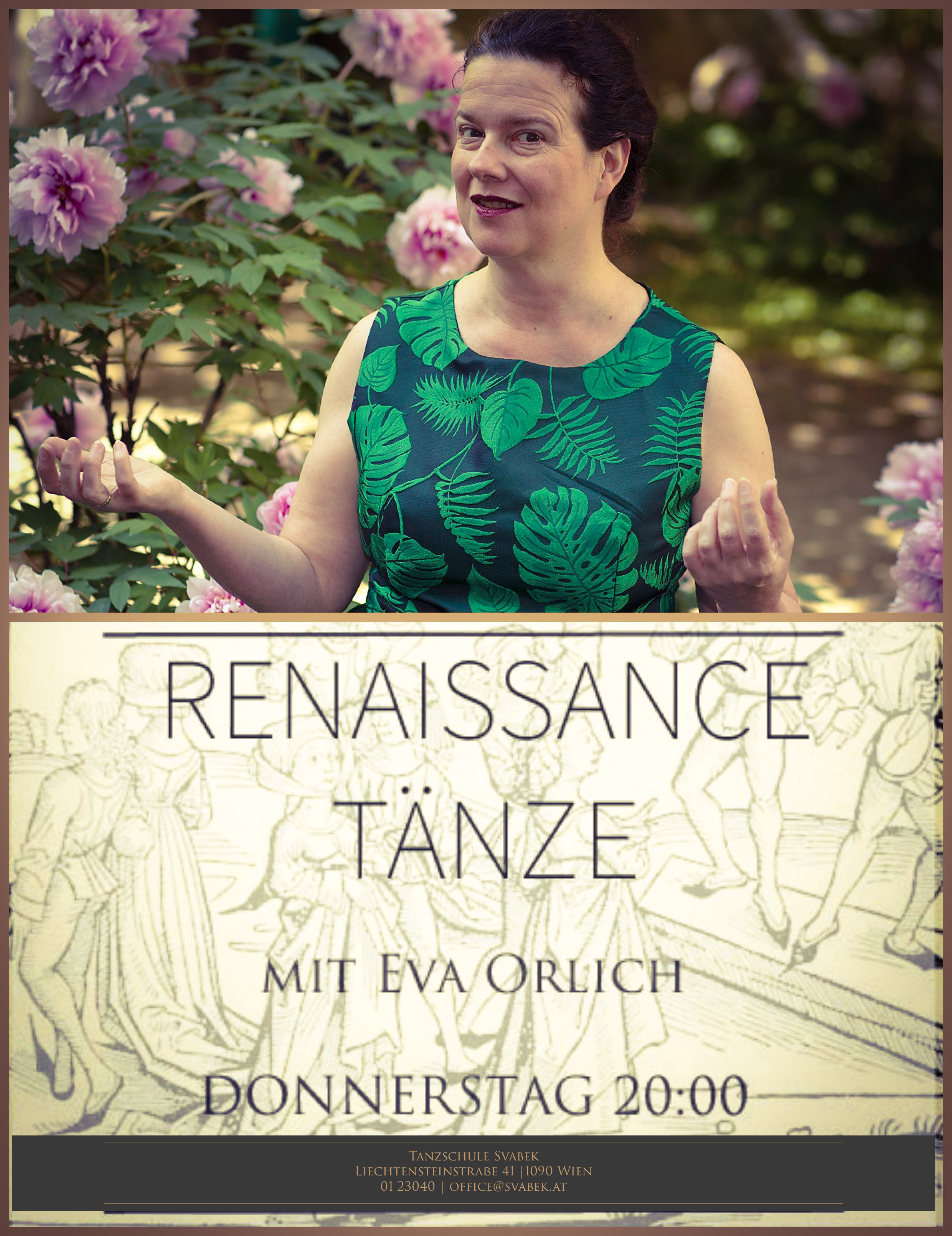
Seit Oktober 2021 gibt es in der Tanzschule Svabek die Möglichkeit, Gesellschaftstänze der Renaissance von Grund auf zu erlernen.
Am 07. April 2022 startet der fünfte Block des Basic-Kurses. NeueinsteigerInnen sind willkommen!
Kosten pro Termin zu je 60 Minuten von 20:00–21:00 Uhr € 14,--/Person.
Die Frühlingstermine: 07.04., 28.04., 12.05., 19.05., 02.06., 09.06.
Keine Vorkenntnisse notwendig.
Kein Partner notwendig.
Aktuell Zutritt mit 2G (geimpft oder genesen, Regelung für Wien)
Anmeldung verpflichtend unter office@svabek.at
- Course
- Renaissance
- Quattrocento
- Cinquecento
- French Renaissance
- Beginner
- Intermediates
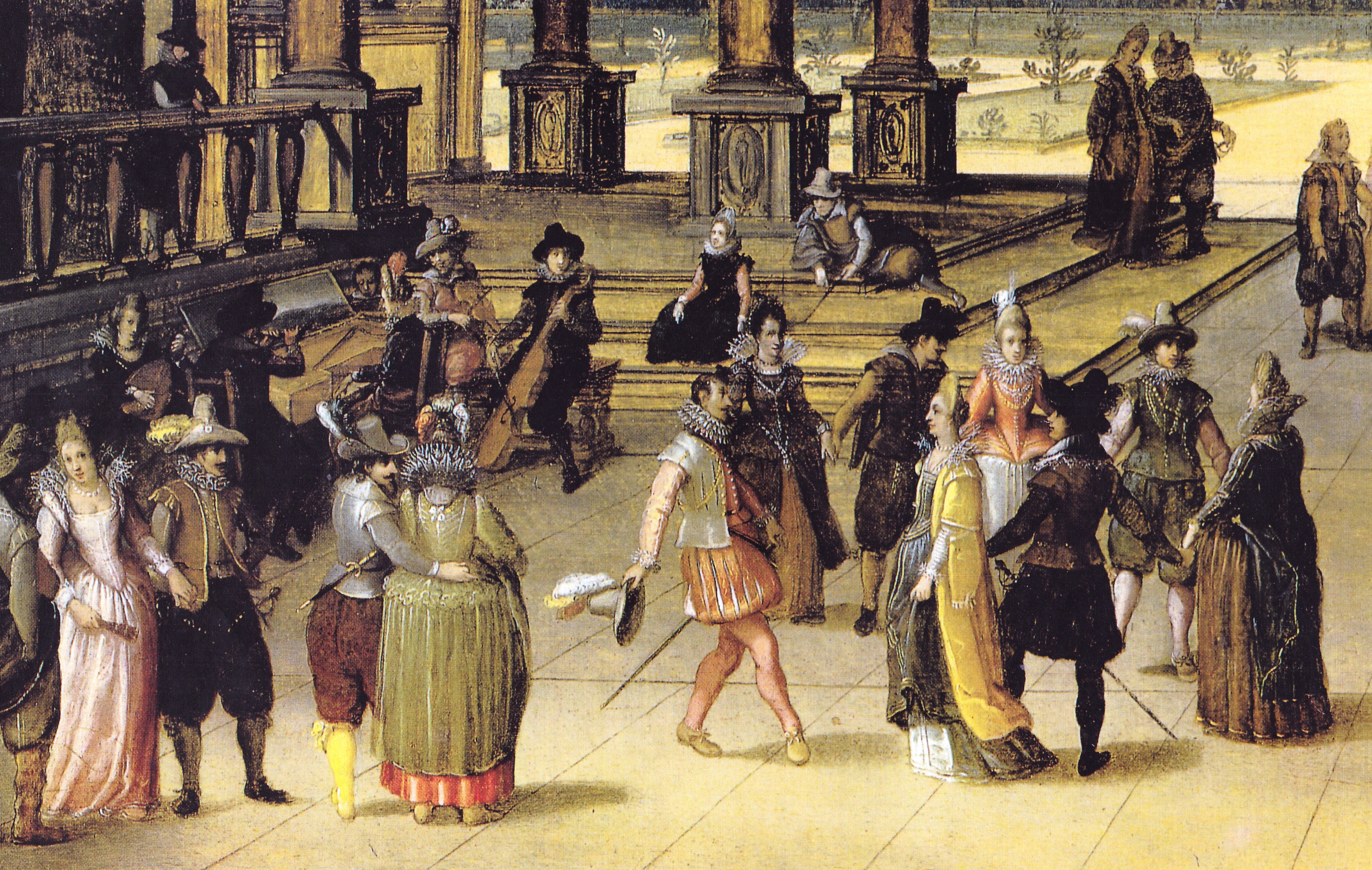
26. Sommertanzkurs: Die Kunst des Tanzens
- Summer School
- Renaissance
- Advanced
Retrieving and Reconstructing the Past Through Dance
• Paul Cooper, Dances and Dancers, prestigious London balls c.1800-1820
• Berenike Heiter, Reconstructing a Second Half of the 18thC Country Dance Repertoire
in Connection with the Central German Provincial Court of Schönburg-Waldenburg
• Beatrice Pfister, Pantomime Ballet as a Mirror of the 18th Century: society and
politics of the Enlightenment
• Petra Dotlacilova, Retrieving Dance of the Past through Costume
• Michaela Mettel, Re-enacting Historical Dance as part of Art and Cultural Education
• Susan de Guardiola, Les Ronds Extraordinaires
• Tiziana Leucci, Between Europe, India, Java and America: Sharing and Migration of
Dance Styles in Jean Cébron’s Choreographic and Pedagogical Systems.
• Christine Bayle, A sophisticated dance practice, in its past and future, both healthy and
beautiful
• Dorothea Sauer, The Method of Émile Jaques-Dalcroze and its Consequences for the
Development of Modern Dance in Europe
• Anne Daye, Finding our Footing: a Discussion of the Evidence for a Social Dance
Step Vernacular to these Islands
• Bill Tuck, Curious Conjunctions: The various inter-weavings between Ralph Vaughan
Williams, Cecil Sharp and Isadora Duncan, 1910-1920
• Barbara Segal, Some Observations on the Concept of ‘Country Dance’
• Hillary Burlock, Politicised Publications: dance manuals and tunebooks in Georgian
Britain
• Alena Shmakova & Mats Melin, Exploring Jacobite themes in Scottish country dance
collections of the 18th century
• Matthew Spring, Dancing opportunities on a family stay in eighteenth-century Bath
• Larraine Nicholas, On the Appeal of Authenticity: The Dance of the Seven Veils in
early 20th Century London
• Helena Kazarova, Topic to be announced
_______________________________________________________________
WORKSHOPS
• Hazel Dennison, Canario Siciliana, or The Diplomatic Dancing Master
• Anne Daye, Dancing at the Barriers
• Susan de Guardiola, Workshop on Regency/19C dance
• Christine Bayle, The Bourée in the Manuscript ‘Instruction pour dancer ‘
• Nira Pullin, The Ragtime Revolution - the Two Step/One Step, Dances that ended the
19th and began the 20th Centuries
_______________________________________________________________
PERFORMANCES
• Christine Bayle & John Whitelaw, Dances from Instruction
• Tiziana Leucci, Introduction to South Indian Dance
• Barbara Segal & Bill Tuck in The Magical Toymaker
To register please fill the booking form attached and send to Barbara Segal. More information at www.earlydancecircle.co.uk/events
- Conference
- Renaissance
- Baroque
- 19th century
- mixed
Bassadanza Corona, Branles und weitere Tänze des 15. und 16. Jahrhunderts
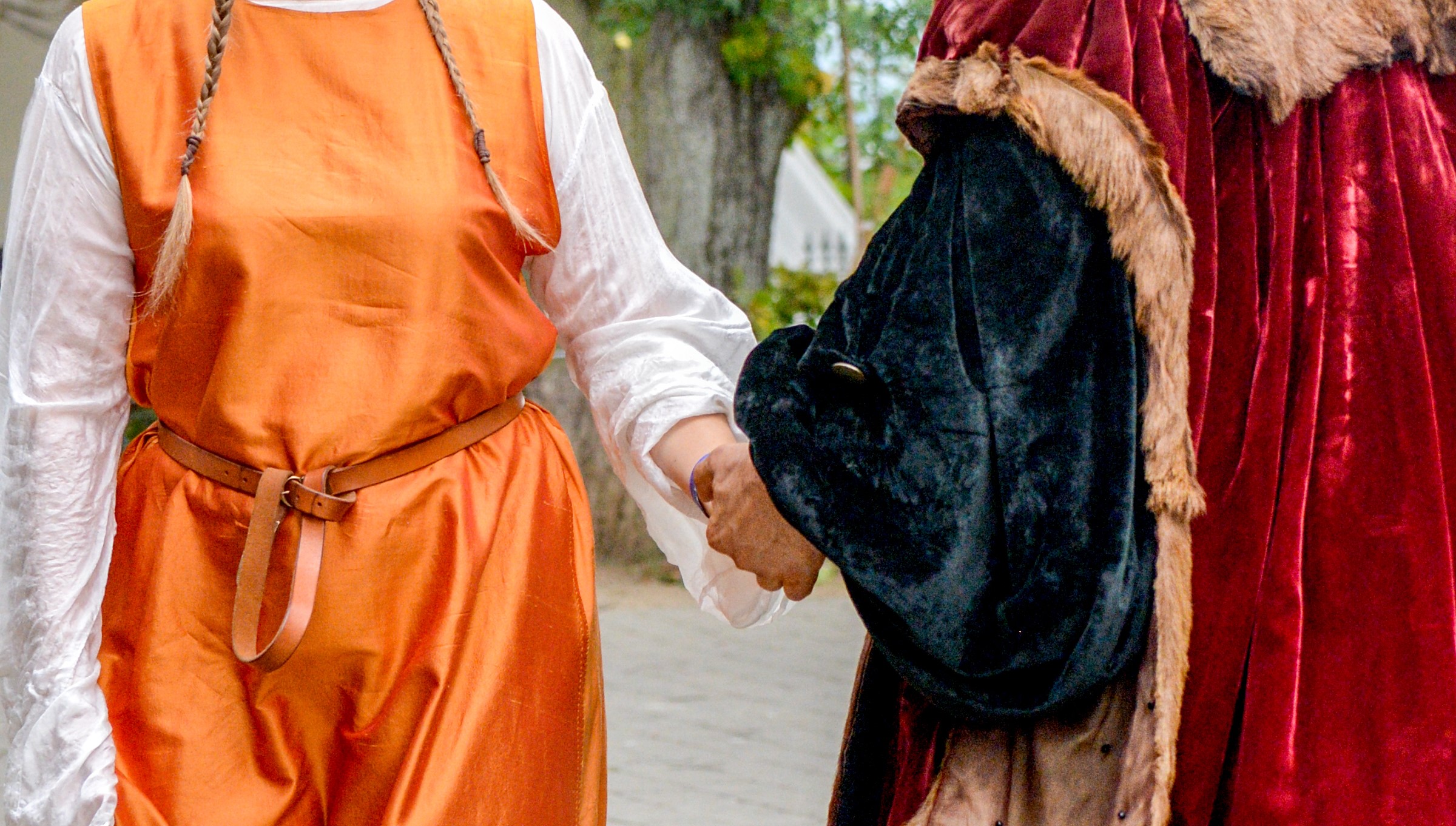
Wann, wenn nicht jetzt: wir tanzen CORONA, eine Bassadanza von Domenico da Piacenza. „Corona“ ist auch das lateinisch/italienische Wort für „Krone“ und in der Tat: Die Bassadanza „Corona“ von Domenico da Piacenza ist so etwas wie die „Krönung“ ihrer Gattung indem sie sich durch außergewöhnliche Schrittfolgen auszeichnet. In den Ausführungen seines Traktates (ca. 1450) erwähnt Domenico diesen Tanz mit dem Hinweis, dass hier besonders viele zusätzliche Tanzbewegungen, so genannte „motti accidentali“ zu finden sind. Dies gibt der Bassadanza Corona eine herausragende Stellung und uns heute eine ungefähre Ahnung, wie die Schrittfolgen einer Bassadanza im 15. Jahrhundert variiert werden konnten.
Als Bassedanse französischer Herkunft steht „Filles à marier“ aus dem Tanzbuch der Margarete von Österreich auf dem Programm. Die Melodie zu dieser Bassedanse existiert auch als Chorsatz, den wir singen wollen. Wenn die Zeit reicht, lernen wir als dritten Tanz aus dem 15. Jahrhundert das Balletto Rostiboli gioioso in der besonderen Fassung für 3 Personen von Giovanni Ambrosio kennen.
Aus der Zeit der ausgehenden Renaissance tanzen wir einige „Nicht-Arbeau-Branles“ aus der Instruction pour danser (anonym; verm. von Antoine Emeraud ca. 1610), so die Branles de Poictou und de Montirande.
Anmeldung über: http://www.lag-tanz-hessen.de/.
- Course
- Renaissance
- Beginner
- Intermediates
- Advanced
Gesellschaftstänze der Renaissance Basic 4. Teil
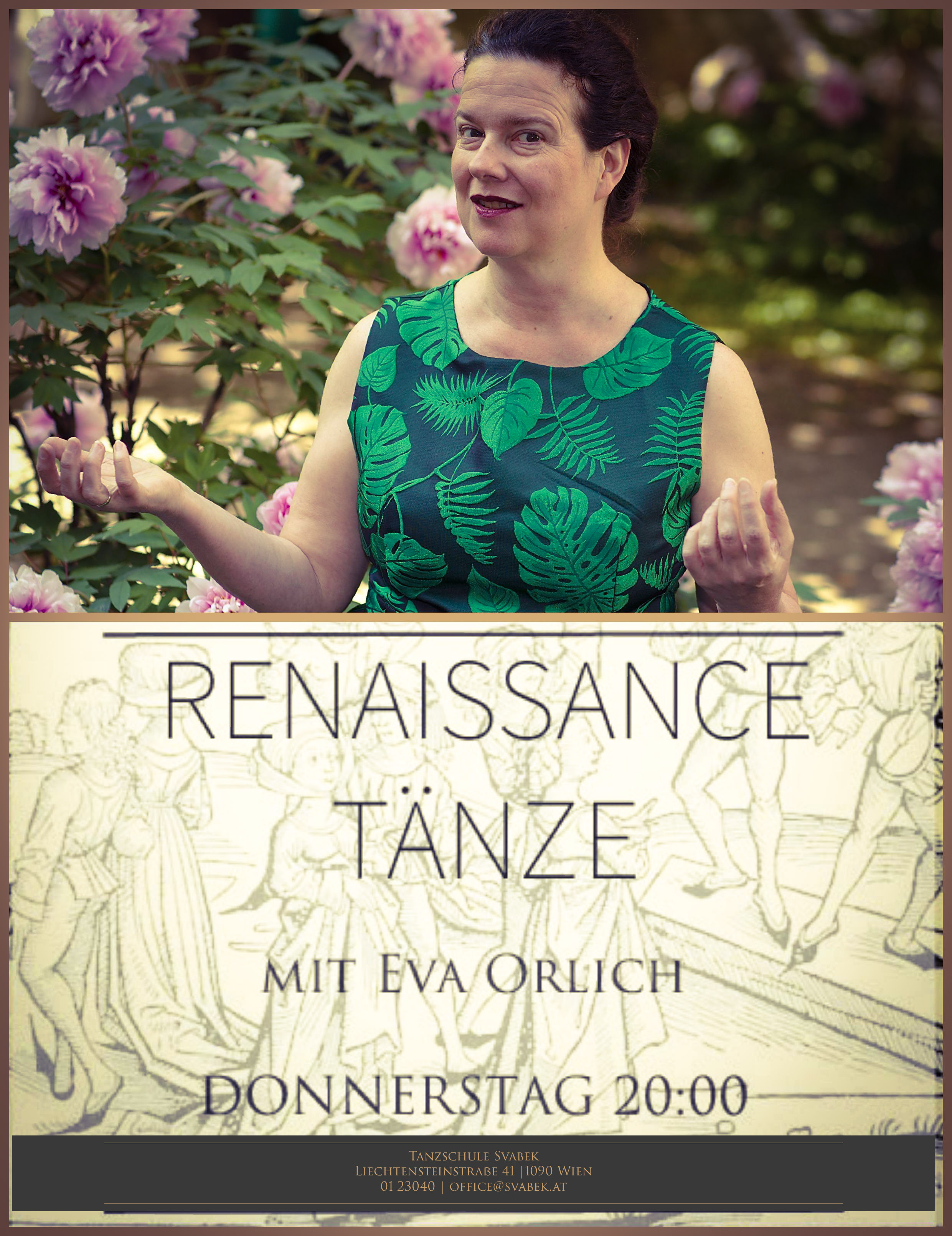
Kein Partner notwendig.
Aktuell Zutritt mit 2G (geimpft oder genesen, Regelung für Wien)
Anmeldung verpflichtend unter office@svabek.at
- Course
- Renaissance
- Quattrocento
- Cinquecento
- French Renaissance
- Beginner
- Intermediates
Eva Orlich
- Teacher
- Medieval
- Renaissance
- Quattrocento
Historische Tanztaverne von Eulenspiel
- Performance
- Medieval
- Renaissance
- All levels
Historische Spielmannstaverne von Eulenspiel
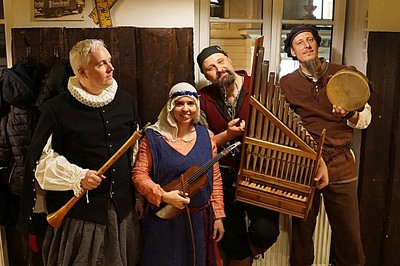
- Performance
- Medieval
- Renaissance
- All levels
Taller de aproximación a la Danza Histórica - Las Dançerías del Emperador
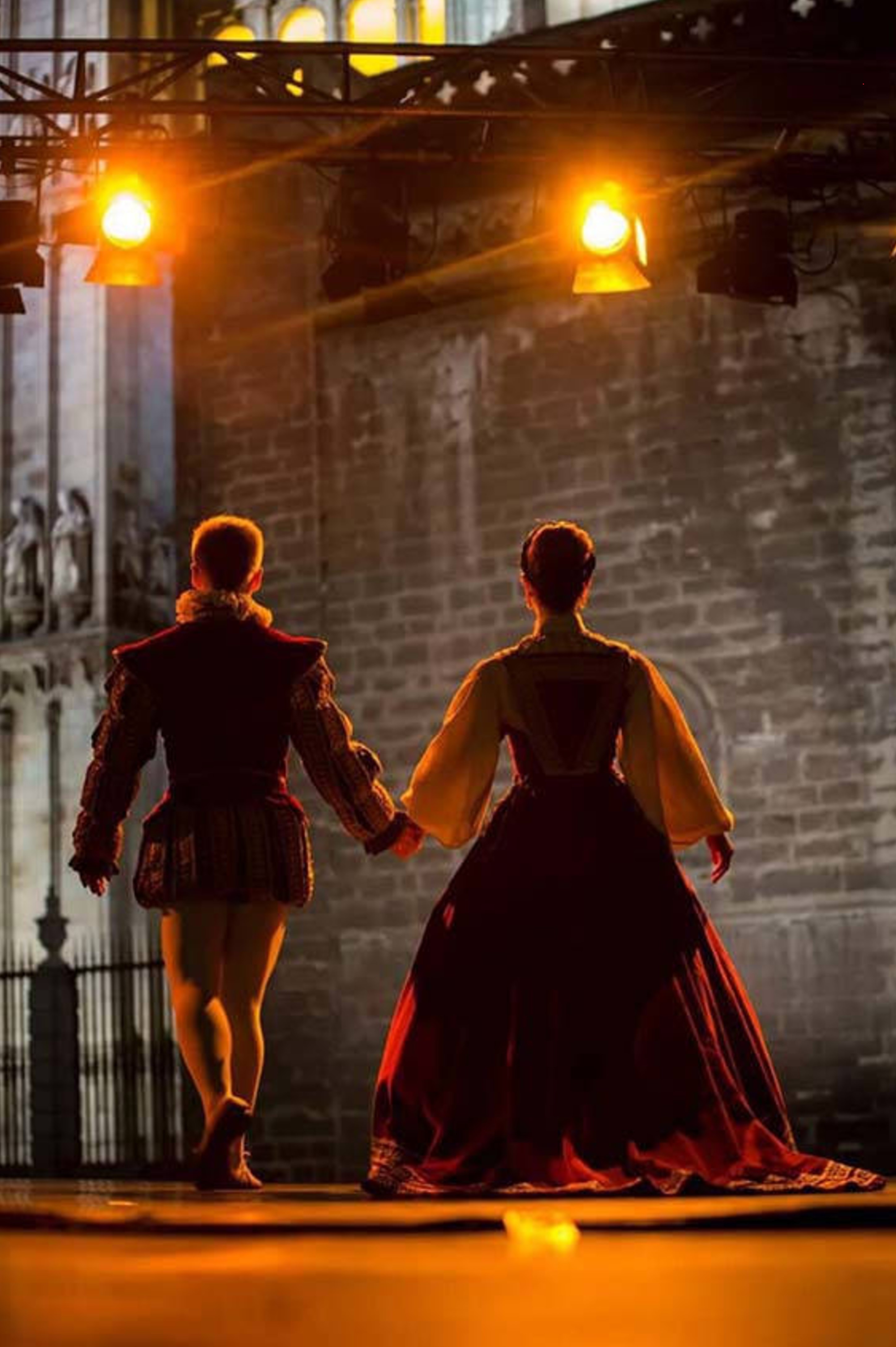
Taller-laboratorio de aproximación a la Danza Histórica desde el repertorio correspondiente al periodo del emperador Carlos de Habsburgo.
Danza ceremonial (Danse de Cleves - Baile de la Flor), danza aristocrática de relación (Contrapaso), danza lúdica (Villanesca) y sus adaptaciones europeas (Pavana de España). Desde las fuentes originales, con una propuesta autóctona de interpretación y adecuación a diferentes entornos y celebraciones, incorporando elementos de atrezzo propios de la nobleza española (abanico, pañuelos, etc.)
Trabajo específico sobre las cualidades masculina y femenina para la danza, así como a las diferentes posibilidades de interactuación según formaciones.
Fechas de celebración: 6 y 7 de noviembre de 2021
Horario:
-
Sábado 6: 10h.- 14h. y 15h. - 17h.
-
Domingo 7: 10h.- 14h.
Precio: 80€
Información e inscripciones:
Casa de la Danza de Logroño
casadanza@casadeladanza.com – www.casadeladanza.com
Calle San Gregorio 10 – 26001 Logroño
Colabora: Excmo Ayto. Sajazarra (La Rioja)
- Workshop
- Renaissance
- All levels
ESQUIVEL (Danza&Música)

Compañía de Danza y Música. Decana de las compañías españolas especializadas en la recuperación de patrimonio coréutico histórico y restauración de patrimonio coréutico escénico autóctono.
Desde 1995, ha participado en los más prestigiosos festivales de Música Antigua, Danza y Teatro Clásico, colaborando con importantes agrupaciones musicales como Lislevand Consort, Emilio Moreno, Orquesta Ciudad de Granada, etc.
Por su plantilla han pasado, en su periodo de formación e iniclios, prácticamente la totalidad de los bailarines y coreógrafos españoles especializados en Danza Antigua.
Con más de 20 producciones propias, es la única compañía que hasta el momento ha efectuado la recuperación integral de Tonadilla escénica del Siglo XVIII y Ballet pantomima (Las Bodas de Camacho).
Sus recuperaciones performativas se basan en un meticuloso trabajo de investigación y contextualización del repertorio estudiado, prestando especial atención a la indumentaria y códigos sociales.
- Dance group
- Organizer
- Performer
- Resource
- Teacher
- Renaissance
- Baroque
- Spanish baroque