Fyrlefanz e.V.

Der 2002 gegründete Verein veranstaltet Liverollenspiele nach dem Phönix-Regelwerk und veranstaltet 1 x im Monat ein Tanztraining für mittelalterliche Tänze (offene Gruppe, jede Altersklasse, neue Tänzer sind immer willkommen).
Unser Hobby und unsere Leidenschaft ist das historische Tanzen. Wir tanzen quer durch die Epochen - von Branles und English Country Dances aus der Renaissance bis hin zu Menuetten und Volkstänzen anderer Länder sowie modernen Tänzen mit Elementen aus dem historischen Tanz oder Square Dance. Vielfalt und Spaß sind uns wichtiger als Perfektion in Schritt und Haltung. Unser Repertoire umfasst viele Epochen und Tanzformen und stammt aus diversen Quellen, z.B. aus der französischen Renaissance (Toinot Arbeau -"Orchéseographie" - 1586) oder englischen Renaissance (gesammelt von John Playford, verlegt ab 1651 - Sammlung "The English Dancing Master") - aber sehr gerne auch aus den “Impropriety“-Heften (von Brooke Friendly und Chris Sackett).
Bei Interesse bitte gerne melden und die aktuellen Termine erfragen!
- Dance group
- Medieval
- Renaissance
- Playford
Stage de danses Baroque et Renaissance Italienne
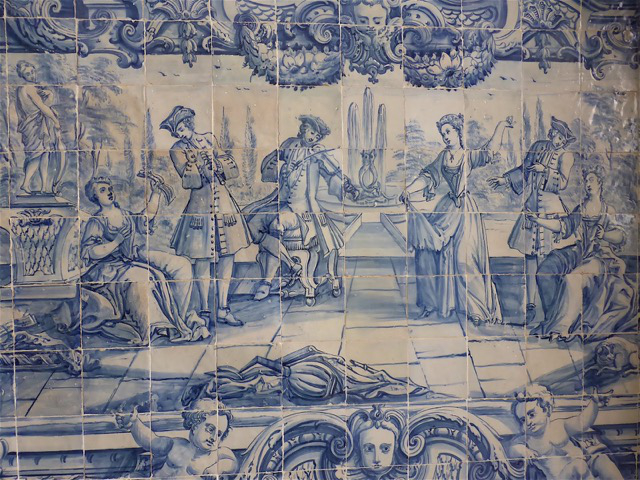
Ces cours s’adressent à tous ceux qui s'intéressent à la danse du 15ème au 18ème siècles. Amateurs, curieux, musiciens, chanteurs, acteurs, chercheurs, pourront s’initier à des danses telles que Bassadanza, Passamezzo, Gailiarda, Balletto, Menuet, Sarabande, Bourrée, Chaconne et d'autres danses du répertoire italien et français.
Les deux niveaux proposés débutants / intermédiaires et intermédiaires / avancés permettent d'accueillir des danseurs professionnels ainsi que des stagiaires avancés en danse
Photo: source Azulejos - Biblioteca Camões, Lisboa
- Workshop
- Renaissance
- Baroque
Stage de danse de la Renaissance italienne et danse baroque
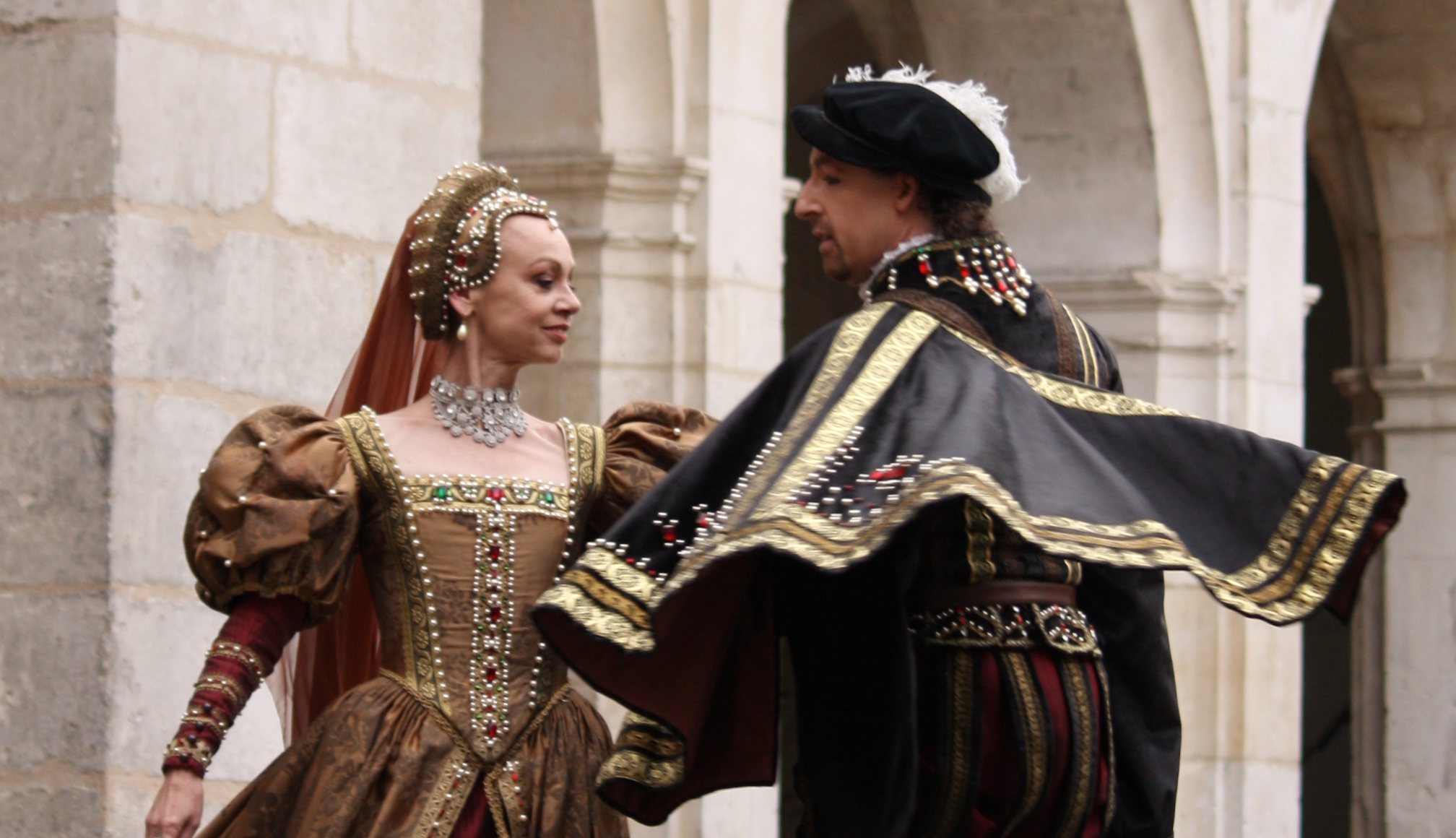
Cet année nous avons le plaisir d’accueillir comme professeurs, Bernadette JACQUET et Stéphane QUEANT de la compagnie Bassa Toscana. Cecilia Gracio Moura pour la danse baroque.
Dates
Vacances de février
Du lundi 17 au samedi 22 février 2020
Niveaux
Nous vous proposons deux disciplines, danse renaissance italienne et danse baroque, réparties en quatre cours pouvant être choisis séparément ou à la suite. Un cours comprendra au total 12 heures d’enseignement.
Programme danse renaissance italienne
Débutants / Intermédiaires :
• Verçeppe (Domenico da Piacenza - De pratica seu arte tripudii vulgareopusculum )
• Bassa Toscana (Caroso - Il ballarino )
• Contrapasso nuovo ( Caroso - Nobilta di dame)
Intermédiaires / Avancés :
• Bassadanza Chastelana (Domenico da Piacenza - De pratica seu arte tripudii vulgareopusculum )
• Selva amorosa ( Caroso - Nobilta di dame)
• Brando di cales (Negri - Le gratie d'amore)
Programme danse baroque
Débutant / Intermédiaire
Je vous propose un parcours dansé sur les danses de théâtre sur la musique de André Destouches : sarabande, bourrée, rigaudon, gigue, menuet, chaconne.
• Marche pour les Guerriers
• Air pour les Magiciens
• Air tendre pour les Bergers
• Menuet pour la suite D’Astrée
Intermédiaire / Avancé
À l’étude, les pas et les enchaînements typiques des danses pour homme.
• Entrée pour homme
Chorégraphie de Raoul-Auger Feuillet, 1700
Musique extraite du Ballet de Flore de Jean-Baptiste Lully.
et
• Entrée de Mr Feuillet
Chorégraphie manuscrite de Raoul-Auger Feuillet, non datée.
Musique sur l’air très connue à l’époque : La Furstemberg ou Les contrefaiseurs.
Dîner de stage
Un dîner convivial entre les stagiaires est prévu le mercredi 19 février vers 19h30
- Workshop
- Renaissance
- Baroque
Tänze aus den Instructions à dancer
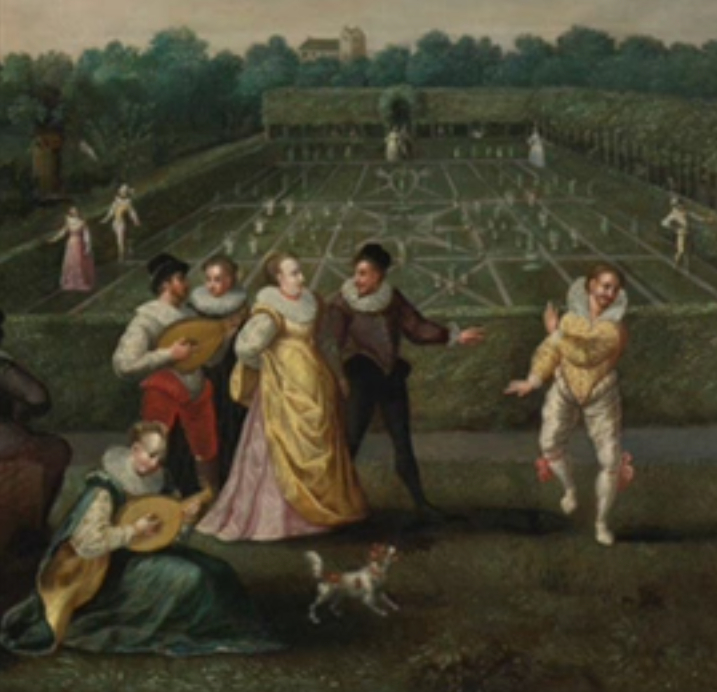
Nach Terpsichore, der griechischen Muse des Tanzes, benannte Michael Praetorius 1612 seine gewaltige Musiksammlung mit über 300 Tänzen und Balletten – eine wahre Schatzruhe schönster Tanzmusik und eine kulturhistorisch unschätzbar wertvolle Quelle. Praetorius, Hofkapellmeister am Hof von Braunschweig Wolfenbüttel, arbeitete dabei mit dem französischen Geiger und Tanzmeister Francisque Caroubel und dem Hoftanzmeister Anthoine Emeraud zusammen. Es sind viele Tänze darunter, deren Bezeichnungen wir von der Orchésographie von Arbeau kennen: verschiedene Branles, Couranten, Gaillarden, Volten. Auch italienisch-spanische Tänze sind darunter wie Pavane de Spagne, Spagnoletta oder Canarie – sozusagen ein Querschnitt durch die gängigen Tänze der Zeit um 1600.
Vor ca. 25 Jahren tauchte das anonyme Tanzbuch „Instructions pour dancer“ mit Tanzbeschreibungen für 17 Tänze auf, deren Titel zum Teil exakt in der gleichen Reihenfolge erscheinen wie in der Terpsichore von Praetorius. Vermutlich stammen sie von Emeraud, der 1610, also zwei Jahre vor der Drucklegung der Terpsichore, aus Frankreich an den Wolfenbütteler Hof gekommen war. Und mit diesen Tänzen haben wir höchstwahrscheinlich Originalchoreographien für die Praetorius-Sammlung und ein Dokument für den Transfer französischer und italienischer Tänze in deutsche Gefilde.
In diesem Seminar wollen wir uns mit einigen Branles aus den Instructions beschäftigen wie Branle simple, Branle de Poitou und Passepied de Bretagne, die andere Modelle liefern als die Orchésographie von Arbeau. Größere Tänze des Seminars sind der heiter-spielerische Tanz „La Boesme“ und „Danse de Chandelier“ aus den Instructions sowie das Balletto „Spagnoletta nuova“ für drei Personen von Caroso, deren berühmte Melodie spanisches Kolorit hat und von berückender Schönheit ist. Auch in der Choreographie gibt es „spanische“ Elemente mit Schlagschritten, den seguiti battuti, wie sie im Canario üblich sind.
Neben diesen Tänzen gibt es wieder schöne Playfords. Weitere Tänze nach Absprache.
Am Samstag Abend (2.5.) ist ein Fest mit Buffet geplant (bitte Kostüme mitbringen, wenn vorhanden, kein „Muss“). Wer möchte, bringt auch Instrumente und Noten mit zum gemeinsamen Singen/Musizieren mit. Es sind alle Teilnehmer eingeladen, nach Belieben etwas aus dem eigenen Tanz- oder sonstigen Repertoire (z.B. Gesang, Rezitation, Schauspiel) der Festgesellschaft zu deren Erbauung vorzuführen.
Organisatorisches
Zeit: Do. 30. April 2020 (Beginn: 19.30 Uhr) bis
So. 3. Mai 2020 (Ende: 12.30 Uhr)
Ort: Benediktbeuern, Pension Schreiber, Bahnhofsplatz 2, 83671Benediktbeuern (schräg gegenüber vom Bahnhof), Saal im 1. Stock
Kosten: 120.- €, (erm. 90.- € für Schüler/ Studenten) inkl. Festbuffet! Die Getränke für das Fest werden von den Teilnehmern selbst besorgt.
Übernachtung: wird selbst gebucht. Hier einige Vorschläge:
- Pension Schreiber, Tel.: 0162-7828930 oder 08857/9500 (Frau Demmel)
- Ferienwohnungen Gion, Tel. 08857-69000, http://www.fewo-gion.de, E-Mail: gionotto@t-online.de
- für weitere Übernachtungsmöglichkeiten: Gästeinformation Prälatenstr. 3, 83671 Benediktbeuern, Tel.08857-248, Fax – 9470, www.benediktbeuern.de.
Anmeldung: per Mail: jadwiga.nowaczek@t-online.de oder per Post an Jadwiga Nowaczek, Parkstr.6a, 85737 Ismaning.
Für eine Anmeldung per Mail das ausgefüllte Anmeldeblatt bitte als Scan im Anhang beifügen.
Die Anmeldung wird erst gültig nach erfolgter Überweisung des Kursbeitrages von 120.- € (erm. 90.- €) auf das Konto
Förderverein für Historischen Tanz e.V., IBAN DE82 8306 5408 0004 7799 91
Stichwort: Tanzkurs B-B 2020
Anmeldeschluss: 15.April 2020
Bei Absagen, die bis 15. April 2020 eingehen, entstehen keine weiteren Kosten.
Bei späteren Absagen müssen 50% der Seminarkosten bezahlt werden, wenn keine Warteliste besteht. Die Teilnehmerzahl ist auf 30 beschränkt.
Veranstalter: Förderverein für Historischen Tanz e.V.
- Workshop
- Renaissance
- Intermediates
Historische Tanztaverne von Eulenspiel
- Performance
- Medieval
- Renaissance
- All levels
Danzando con Leonora
DANZANDO CON LEONORA
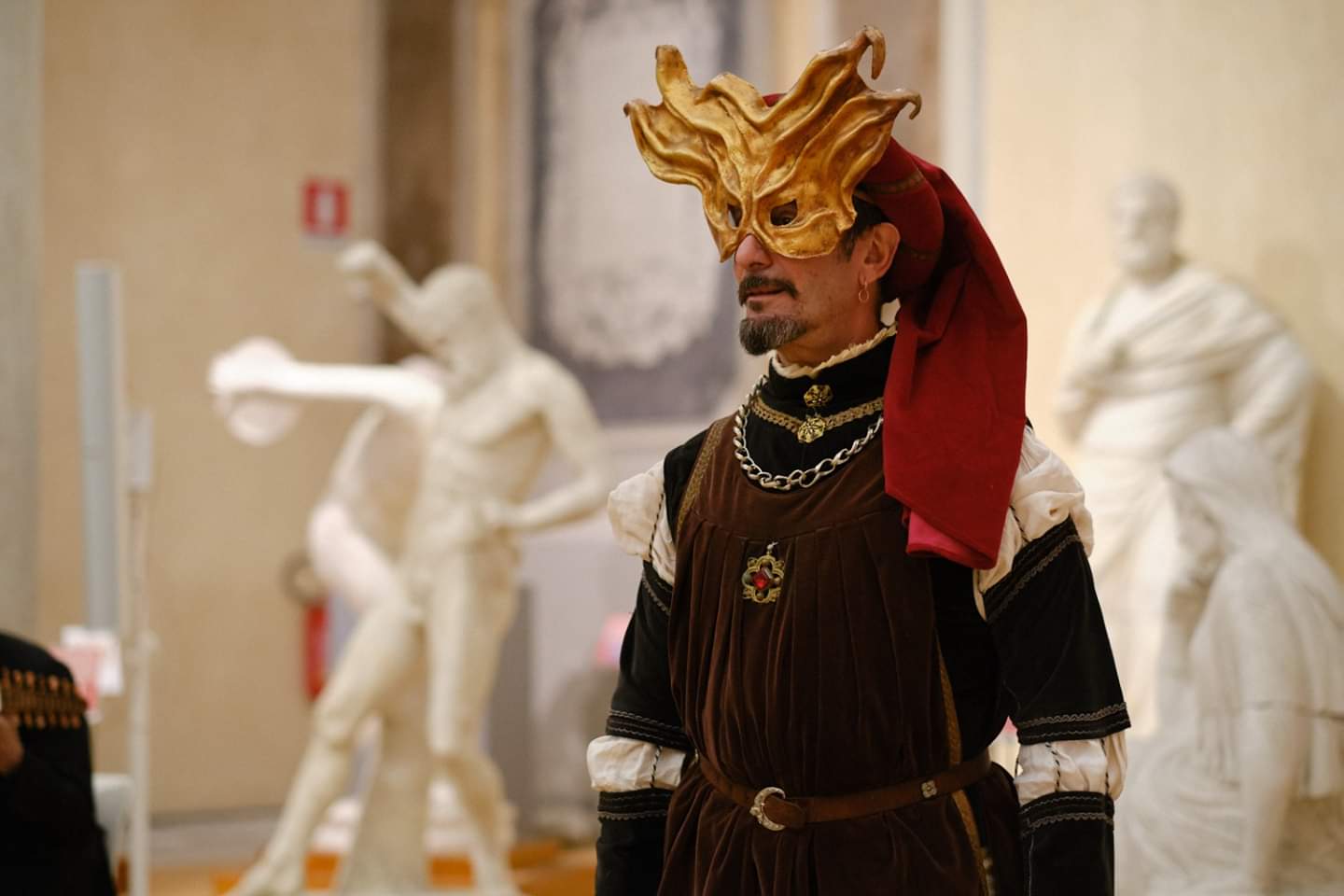
Spettacolo di Danza Rinascimentale in occasione del 500 anniversario della nascita di Cosimo I, che ricrea il matrimonio fra il Gran Duca e la Duchessa spagnola, Leonora di Toledo nel 1539 a Firenze.
Sant Marks English Church , Firenze
Sabato 21 dicembre, alle ore 15
Via Maggio, 18, Firenze
Direzione artistica, Sofia Grande
Coreografie e ricostruzione coreografica, Marco Bendoni e Bruna Gondoni
Ballerini,
Marco Bendoni, Cosimo I de´Medici
Bruna Gondoni, Leonora di Toledo
Beattrice Brignani, dama di corte
Sherezade Soriano, dama di corte
Cantante
Saray Garcia, Musica e Musa
Communicazione: Elizabeth Arana
Consulente, Victoria Padrón
Sara Benitez e Barbara Llopis
( collaborazione costumi)
Ringraziamenti: Helmut Kaldewey
ILE Producciones
info@ileworld.com
- Performance
- Renaissance
Stage de danse renaissance française et italienne
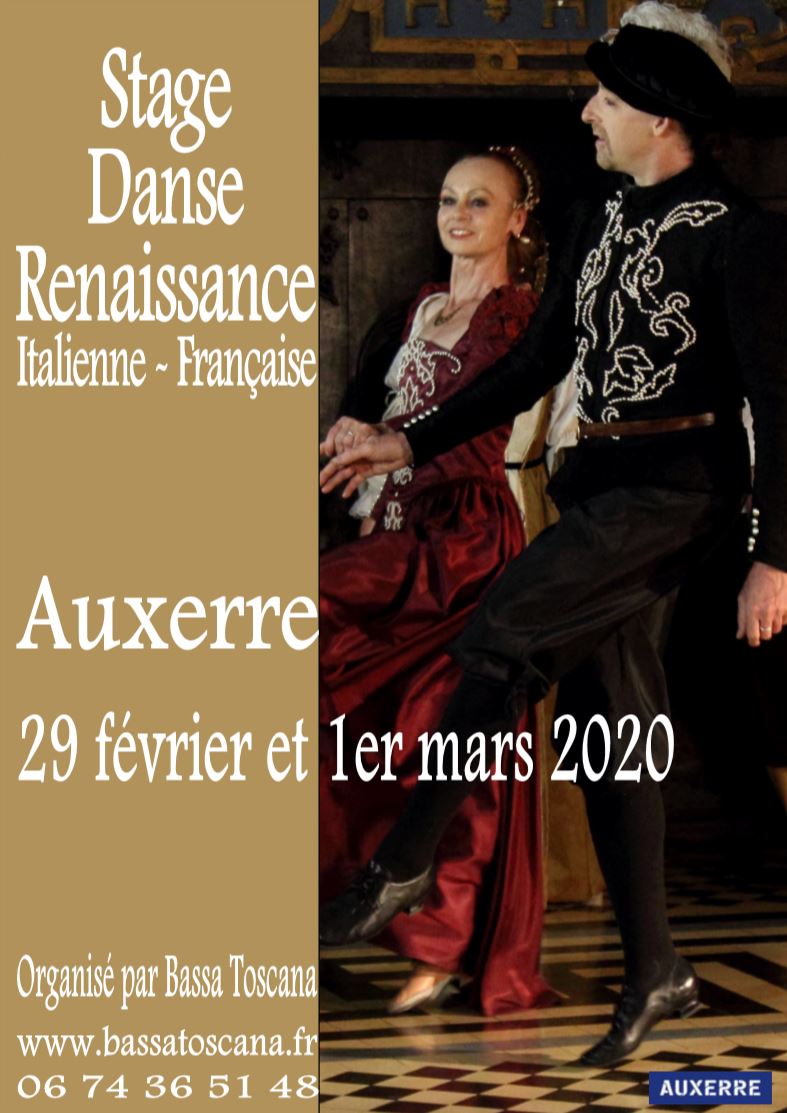
“ La danse est une espèce de réthorique muette, par laquelle l’orateur peut, par ses mouvements, sans parler un seul mot, se faire entendre et persuader les spectateurs qu’il est gaillard digne d’être loué, aymé et chéri… ” (Thoinot Arbeau, Orchésographie, Langres 1588 ). Du XVe siècle à la Renaissance, nous connaissons essentiellement la danse de cour. Bien danser, savoir chanter et jouer d’un instrument permettaient de tenir avec grâce et dignité son rang dans la société. La Renaissance en musique et en danse est caractérisée par l’introduction dans le registre courtois de formes et d’éléments populaires. C’est ainsi qu’une part importante est accordée aux rondes, facteur de convivialité et de cohésion sociale. Les traités du XVe siècle (Ebréo, Piacenza, manuscrit de Marguerite d’Autriche) et ceux du XVIe siècle (Negri, Caroso, Arbeau…) offrent les premières notations des pas et mouvements de danse. Deux formules répondront aux besoins des stagiaires, débutants ou initiés:
- Les bases de la danse de la Renaissance française seront enseignées à chacun des stages suivant le répertoire de Thoinot Arbeau, ( branle double, branle simple, branle coupé, branle morgué, branle gay, gavotte, pavane, gaillarde et volte...).
L’atelier chorégraphique s’attachera à l’étude du style et à l’expression esthétique des danses de la Renaissance italienne. La mise en espace du mouvement s’appuiera, soit sur des créations, soit sur des reconstitutions d’époque telles que: Basse danse Reale (Domenico), basse danse Cupido (Guglielmo), Leggiadra Marina, Lo Spagnoletto, Amor Costante Spagnoletta, Laura Suave...
Production:
Bassa Toscana
23.rue des Grands Champs
Laborde
89000 Auxerre
Président:
Jean-François Méchain
Animateurs membres le la Fédération française PRO.D.A
Bernadette Jacquet
Stéphane Quéant
Lieu:
Maison de la danse
9, rue Milliaux
89000 Auxerre
Renseignements
Stéphane Quéant:
06 74 36 51 48
Renseignements
FORMULE 1 (initiation )
Horaires :
Samedi 14 h à 16 h
Dimanche 12 h à 14 h
Tarifs
1 après-midi : 27 €
2 après-midi : 38 €
FORMULE 2
( initiation + atelier chorégraphique )
Horaires :
Samedi 14 h à 18 h
Dimanche 12 h à 16 h
Tarifs :
1 après-midi : 38 €
2 après-midi : 46 €
Tarifs spécial couple:
Stage complet: 85 €
½ Stage: 70 €
ANNULATION :
L’association Bassa Toscana se réserve le droit d’annuler un stage, auquel cas les inscriptions reçues seraient intégralement remboursées. Les animateurs peuvent également intervenir sur le programme en fonction du niveau et du nombre de stagiaires.
- Workshop
- Course
- Renaissance
- Quattrocento
- Cinquecento
- French Renaissance
- All levels
5th Historical Dance Symposium "The Ball: Pleasure - Power - Politics, 1600 - 1900
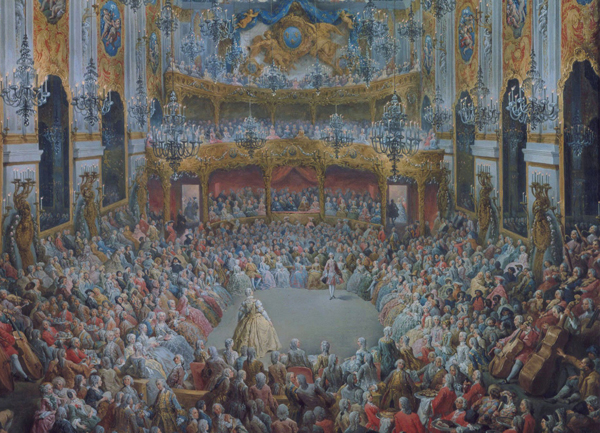
The Ball
Pleasure - Power - Politics
1600 - 1900
The ball, a universal social phenomenon, whether at princely courts, civic festivities or private celebrations, has many new facets across the centuries.
Dedicated to the pleasures of dance in multifarious forms and styles, the ball is also an arena for displays of princely power, staged rituals, carefully regulated forms of social contact, and advantageous self-representation. Not least, the ballrooms of Europe reflect the continent’s political and societal developments, their evolutions and revolutions.
Our journey through three centuries of dance history not only leads us to the ballrooms of Vienna, Dresden and Moscow, but also illustrates the transfer of dance culture across the whole of Europe. We trace the lives of dancing masters who once drew crowds to the ballrooms and explore the various manifestations of balls on stage.
In addition to lectures, the symposium includes workshops and dance evenings, in which the most popular ball dances, such as minuet, allemande, contredanse and quadrille, evoke the atmosphere and sensibility of these epochs.
Conference languages are English and German. This time with simultaneous translation into English and German!
RESEARCH DANCE - DANCE RESEARCH: Our central goal is to bring together dancers and researchers and thus enable intensive interaction between the latest research and current dance practice.
- A series of lectures presents the present status of dance research.
- Workshops give an opportunity to try out new dance styles and reconstructions.
- Short performances demonstrate current artistic interpretations.
- A bookshop offers a wide range of literature and music relating to dance.
- Social dance evenings with live music help make a variety of new contacts.
- A celebratory ball with costumes of the period represents the culmination of the conference.
- Sharing leisure and programme together in the castle enables a time of especially intensive contact.
Lectures: Giles Bennett - Hillary Burlock - Eugenia Eremina-Solenikova - Matilda Ertz - Maria Cristina Esposito - Dmitry Filimonov - Carola Finkel - Rebecca Harris-Warrick - Gerrit Berenike Heiter - Birte Hoffmann-Cabenda - Michaela Mettel - Nona Monahin - Angela Rannow - Daria Sundukova - Eva Zöllner
Research Posters: Maria Derkach - Maria Cristina Esposito - Dmitry Filimonov - Susan de Guardiola - Alan Jones - Michaela Mettel - Ekaterina Mikhailova-Smolniakova - Daniele Pascale Guidotti Magnani - Bill Tuck - Davide Vecchi
Workshops: Anne Daye - Irène Feste - Dmitry Filimonov - Susan de Guardiola - Hubert Hazebroucq - Rostislav Kondratenko - Guillaume Jablonka
Dance evenings: Anne Daye - Alan Jones - Barbara Menard-Pugliese - Antonia Pugliese
Short performances: Chorea Basilea (dir. Mojca Gal) - Cie Fantaisies Baroques (dir. Irène Feste, Pierre-François Dollé) - LA DANZA MÜNCHEN (dir. Jadwiga Nowaczek)
Scientific committee: Dr. Irene Brandenburg (Salzburg, Österreich), Dr. Anne Daye (London, Großbritannien), Prof. em. Carol G. Marsh (Washington, USA), Prof. em. Marie Thérèse Mourey (Paris, Frankreich), Markus Lehner (Herrsching, Deutschland)
Organisation: Markus Lehner, Uwe Schlottermüller
For extensive information on the conference, see: www.historical-dance-symposium.org
- Workshop
- Ball
- Conference
- Renaissance
- Baroque
- Rococo
- 19th century
- Regency
- Intermediates
- Advanced
- Professionals
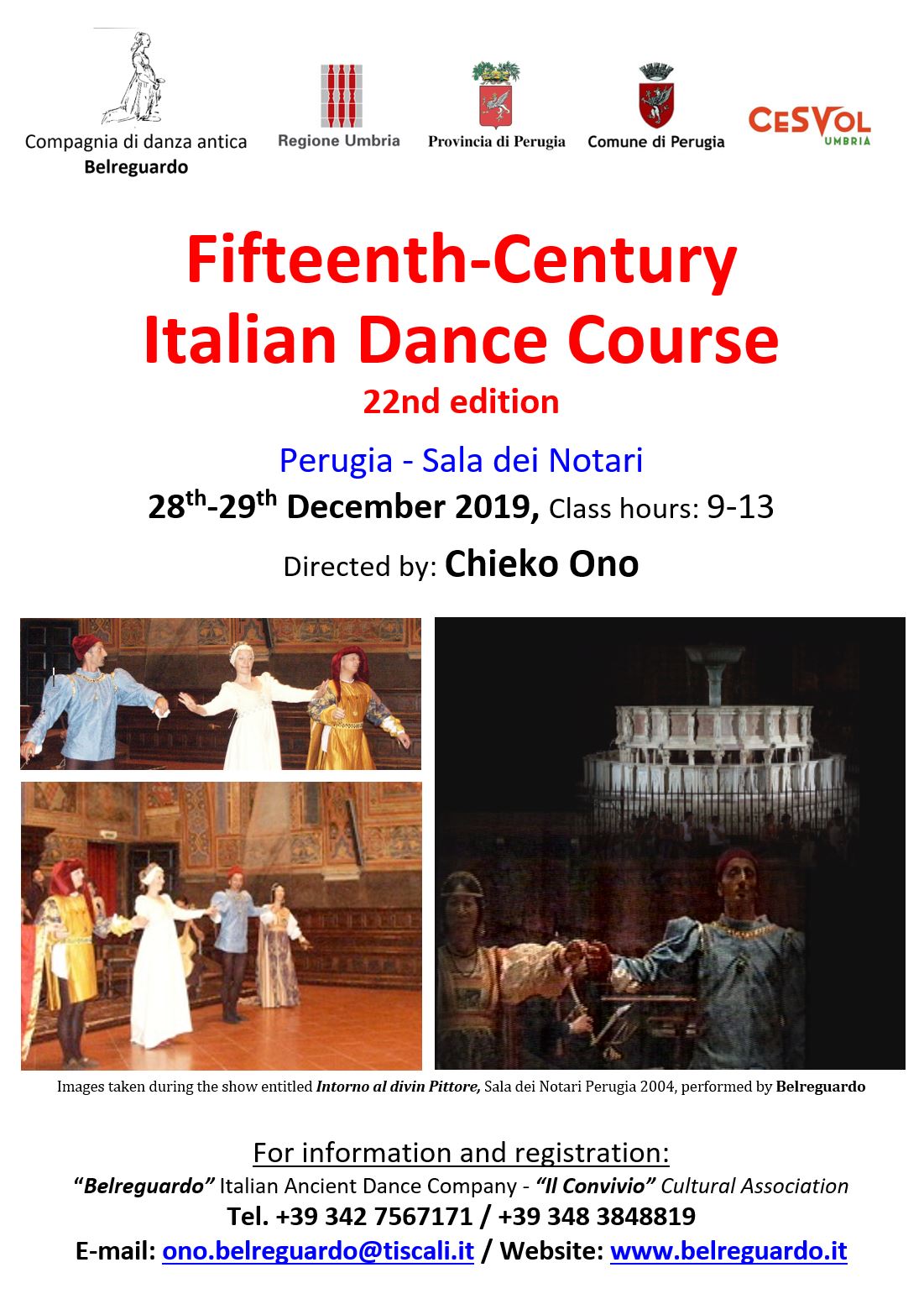
Fifteenth Century Italian Dance Course - Workshop di danza italiana del '400
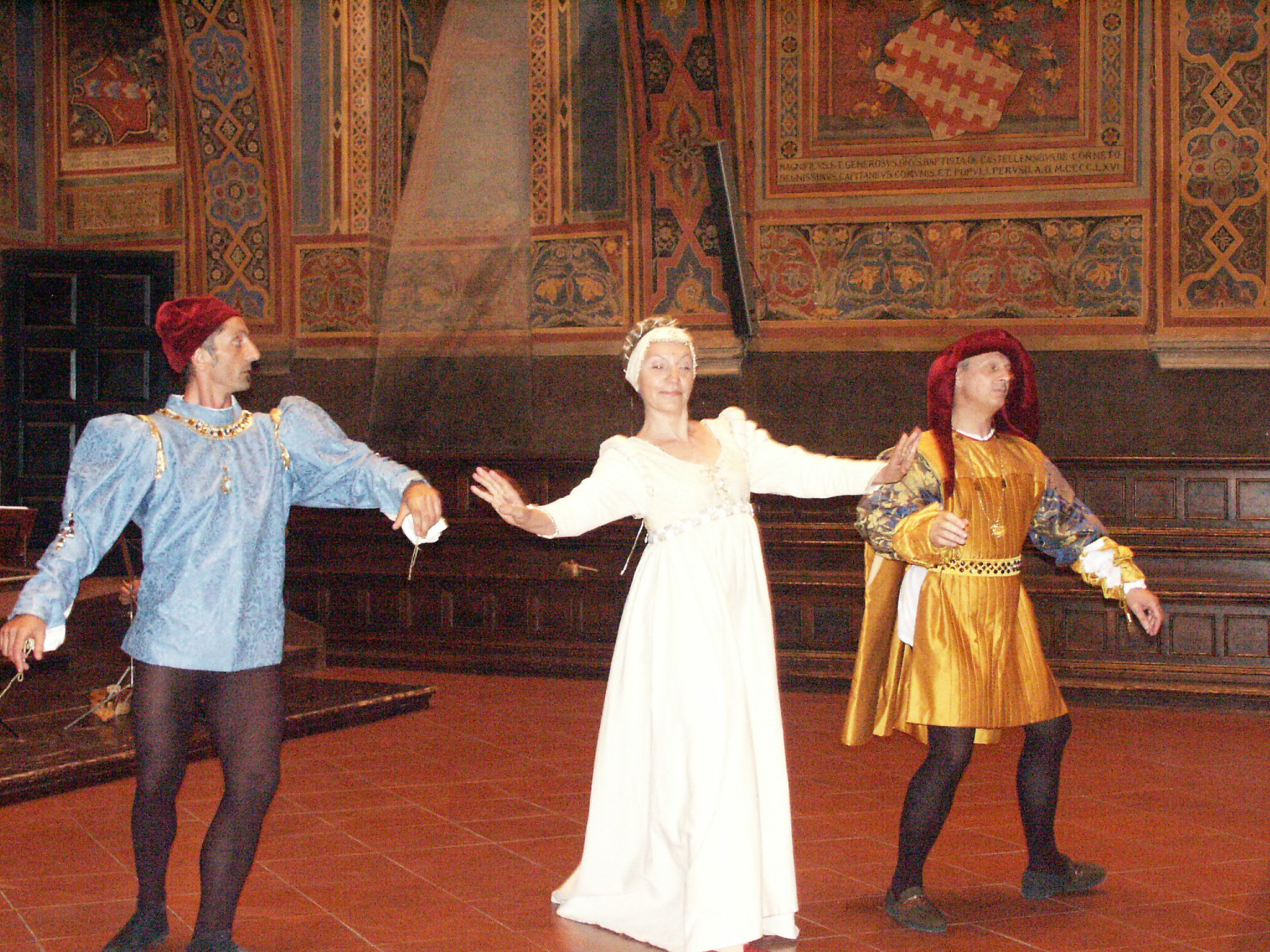
Fifteenth-Century Italian Dance Course (22nd edition), directed by Chieko Ono (see the flyer attached)
| Date: |
| Saturday, December 28th - Sunday, December 29th, 2019. |
| Time: |
|
9-13 for both days |
| Place: |
| Sala dei Notari, Piazza IV Novembre 1, Perugia, Italy |
| Program: |
| - An introduction phase in which the historical and iconographic context of the 15th-century dances will be illustrated. A particular focus will be given to the theoretical elements of bassadanza and ballo, the two major dances of the Renaissance period; |
| - A second phase of exercises to allow each participant to put into practice the theoretical elements acquired and develop their artistic skills. We will be using the CD "Gloria et Malum" which contains original ancient music, produced by Chieko Ono and the Ensemble Micrologus. |
| Registration: |
| You can sign up by sending us an email with the names of the participants to: ono.belreguardo@tiscali.it |
| Participation on both days is preferable. |
| Cost of participation: |
| 50 € / person, to be settled in advance by bank transfer to: "Ass. Cultural Il Convivio ", |
| IBAN: IT40R 03127 03001 0000 0000 3558 (Unipol Banca). Please cite the “Dance course” and your name as a reference for the payment. |
| Please do not hesitate to write us for further enquiries. We are looking forward to enjoying the art of dancing with you! Thank you. |
| "Il Convivio" Cultural Association |
| "Belreguardo" Ancient Dance Company |
| viale patrono d’Italia 66, |
| 06081 Assisi (PG), Italy |
| Tel. +39 (0) 75 8043548 / +39 342 7567171 |
| Email: ono.belreguardo@tiscali.it |
| www.belreguardo.it |
***
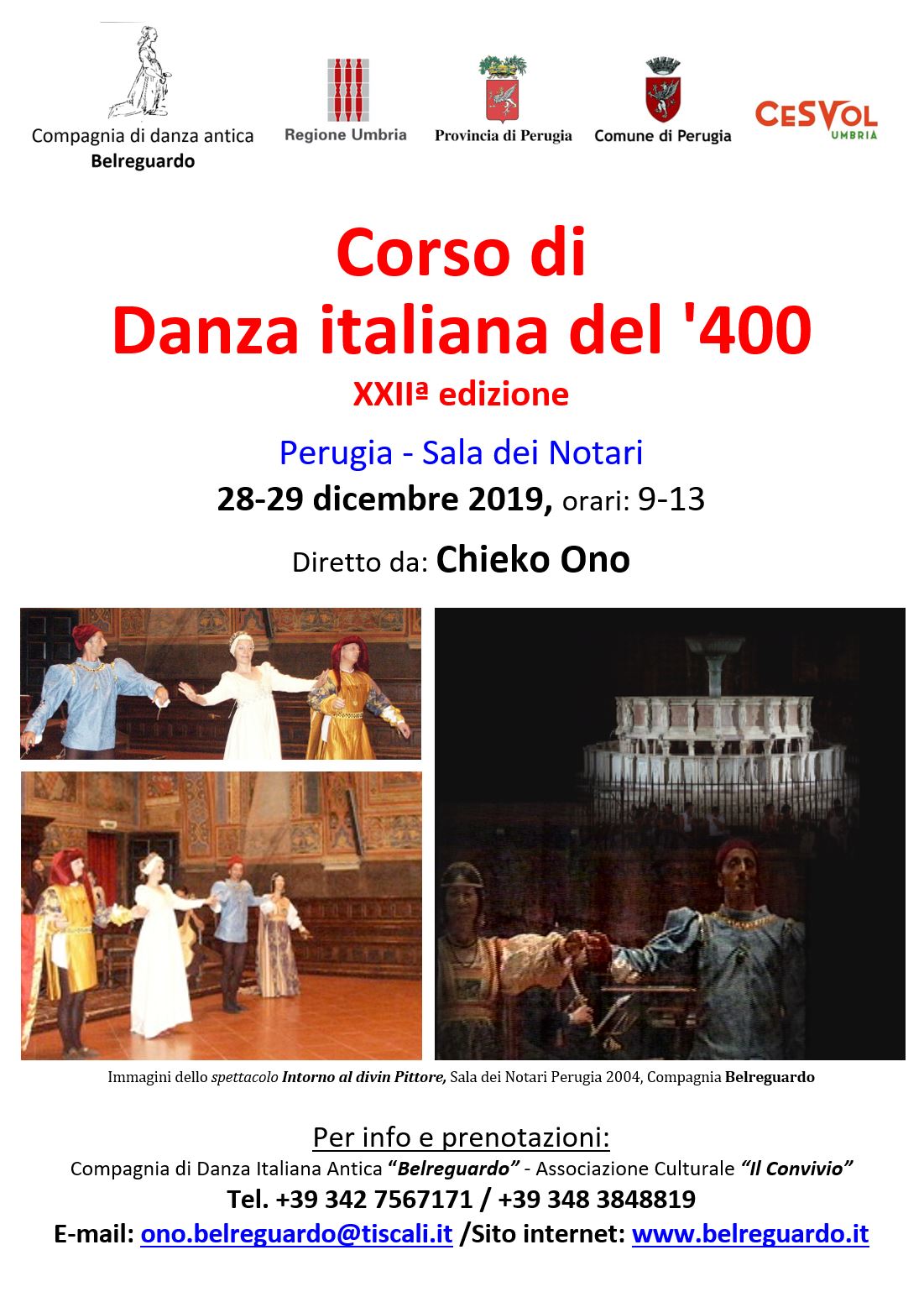
Corso di Danza italiana del '400 (XXIª edizione), diretto da Chieko Ono (vedi brochure allegata)
| Date: |
| sabato 28 e domenica 29 dicembre 2019. |
| Orari: |
|
9-13 entrambi i giorni. |
| Luogo: |
| Sala dei Notari, Piazza IV Novembre 1, Perugia |
| Programma: |
| - una fase di introduzione in cui verrà descritto il contesto storico e iconografico delle danze del '400. Verranno illustrati gli elementi teorici di bassadanza e ballo, in voga in quest’epoca; |
| - una seconda fase di esercizi per consentire ad ogni partecipante di mettere in pratica gli elementi teorici acquisiti e sviluppare le proprie capacità artistiche. Sarà utilizzato il CD “Gloria et Malum” contenente musiche inedite, frutto di una stretta collaborazione tra Chieko Ono e l’Ensemble Micrologus. |
| Iscrizione: |
| Inviare un’email con i nominativi dei partecipanti a: ono.belreguardo@tiscali.it |
| E’ preferibile la partecipazione ad entrambe le giornate. |
| Costo di partecipazione: |
| 50 euro/persona, da pagare in anticipo con bonifico intestato a: “Ass. Culturale Il Convivio”, |
| IBAN: IT40R 03127 03001 0000 0000 3558 (Unipol Banca). Inserire nella “causale” il riferimento “CorsoPG2018” e il proprio nominativo. |
| Rimaniamo a disposizione per ulteriori informazioni. Vi aspettiamo! |
| Grazie. |
| Associazione Culturale "Il Convivio” |
| Compagnia di Danza Italiana Antica "Belreguardo" |
| viale patrono d’Italia 66, |
| 06081 Assisi (PG), Italia |
| Tel. +39 (0) 75 8043548 / +39 342 7567171 |
| Email: ono.belreguardo@tiscali.it |
| www.belreguardo.it |
|
Note:
Nei manoscritti "dell’arte del danzare" del '400 sono conservate teorie, coreografie e talvolta musiche dalle quali è possibile ricostruire le danze di corte italiana. I precettori dell’epoca infatti codificarono le danze in trattati tecnici e pratici che ancora oggi si trovano nei manoscritti delle varie biblioteche del mondo. Crediamo che questo workshop di danza di corte rappresenti un’ottima occasione per conoscere lo stile e le regole stabilite dai maestri italiani del '400 e far rivivere il Rinascimento sulla nostra pelle. È possibile, infatti, scoprire la cultura dell’epoca rinascimentale non solo tramite la pittura, l’architettura e la musica, ma anche attraverso la danza facendo uso del proprio corpo. La particolarità del workshop è rappresentata dall’uso di testi originali dell’epoca, la cui ricostruzione e rielaborazione sono il frutto di ricerche e studi costanti di Chieko Ono, oltre a rappresentare un’assoluta novità. Il workshop, organizzato dalla Compagnia di danza Belreguardo, è rivolto a tutti: professionisti del settore, principianti e semplici appassionati che vogliono condividere insieme la gioia del danzare. Ai partecipanti non è richiesta alcuna preparazione specifica. |
|
La Compagnia di danza Belreguardo è stata fondata nel 1993 ad Assisi, dove ha tuttora sede, e realizza spettacoli e corsi che uniscono danza, musica e recitazione. La Compagnia si è esibita presso luoghi storici celebri in Italia e all’estero.
Un dettagliato resoconto delle attività è disponibile nel sito ufficiale della compagnia: www.belreguardo.it |
| Chieko Ono è laureata in Giappone, vive fra Assisi (PG) e Guardea (TR) ed è direttrice dell’Associazione culturale Il Convivio. Ha fondato la Compagnia di Danza Belreguardo nel 1993. La sua attività principale è la ricerca filologica finalizzata alla ricostruzione e alla valorizzazione della danza italiana del XV e XVI secolo partendo dall’analisi di documenti originali dell’epoca. Conduce laboratori di danza di corte italiana in Italia e all’estero (Australia, Giappone, USA e Svizzera). Ha svolto diverse conferenze frutto dello studio comparato della danza antica in Oriente e Occidente. Ha tradotto il libro La danza giapponese di Tamotsu Watanabe (Ed. Ali & No, 2001). Ha prodotto il CD Gloria et Malum – musiche della danza italiana del Quattrocento (Micrologus-Belreguardo, 2008). Scrive per la rivista Tohoku Art and Culture Society (articolo La danza e l'arte italiana del quindicesimo secolo: opere d'arte in movimento, Danza italiana del 15° secolo, Tohoku Art and Culture Society n. 17, 2012). |
- Workshop
- Course
- Renaissance
- Quattrocento
- Beginner
- Intermediates
- Advanced
- Professionals
- All levels
BAL RENAISSANCE - DANSE MEDIEVALE
- Ball
- Medieval
- Renaissance
- All levels