Das onoldische Schatzkästlein
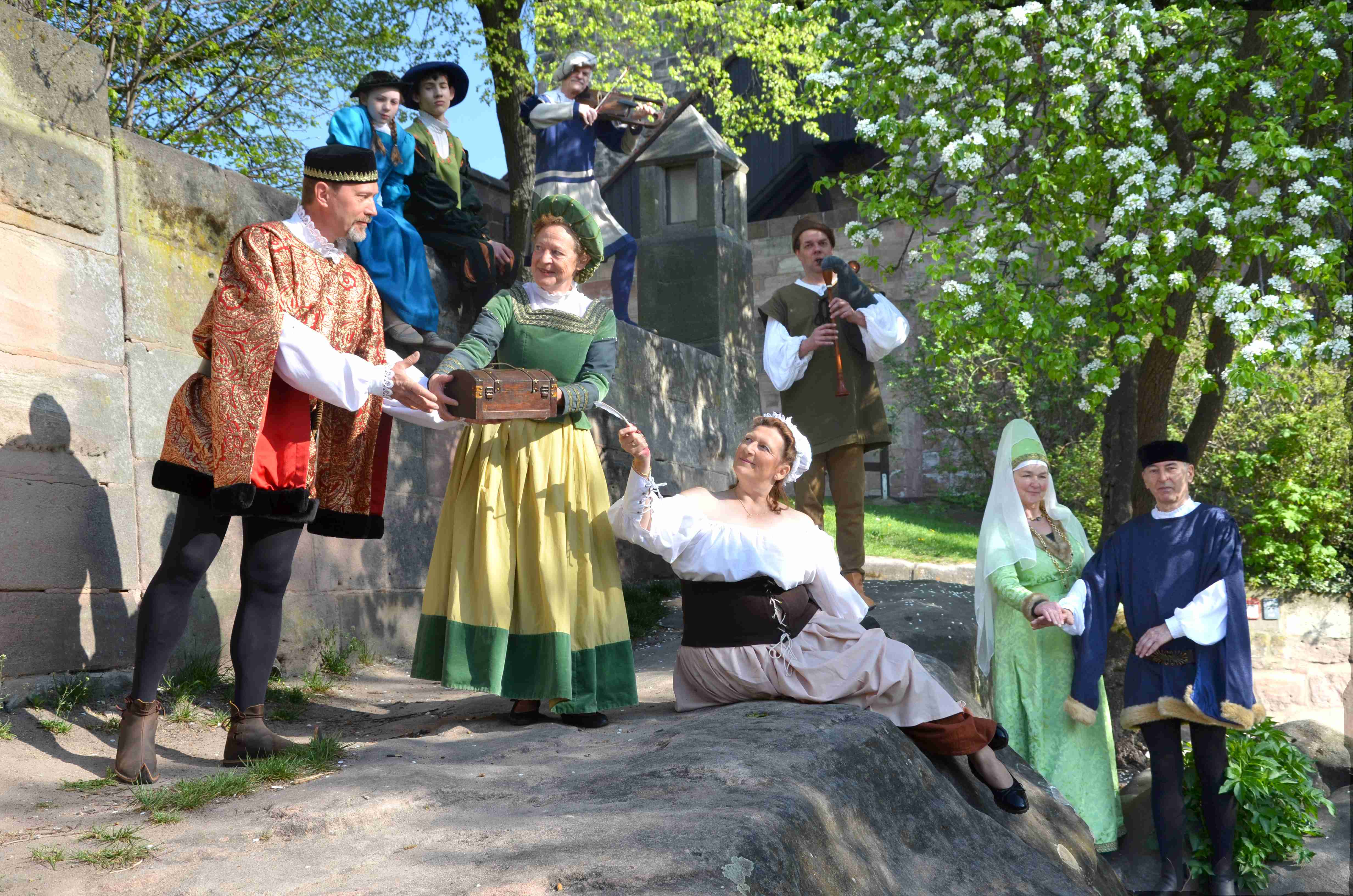
Man sagt, die Nürnberger und die Ansbacher sind sich nicht grün. Schon vor 500 Jahren wurde auf beiden Seiten getrickst, getäuscht und taktiert. Ein geheimnisvolles Schatzkästlein entführt die Zuschauer in die Zeit, in der der Konflikt mit dem Verkauf der Nürnberger Burg seinen Anfang nahm.
Die Ansbacher Markgrafentochter Margarete ist wild entschlossen, eine gute Partie zu machen, auch wenn ihre Chancen als eines von 17 Kindern schlecht stehen. Um sich schmeichelhaft in Samt und Seide zu präsentieren, greift Margarete zu drastischen Mitteln. Sie lässt das wertvolle Schatzkästlein der Familie durch ihre Kammerzofe Barbara nach Nürnberg verkaufen. Diese hat in die Noris bessere Kontakte, als der Marktgraf je erfahren darf, denn insgeheim ist sie Kundschafterin der Nürnberger Patrizier. Beide Frauen ahnen nicht, dass sie mit dem Diebstahl des unersetzlichen Familienerbes der fränkischen Zollern einen Fluch auf sich laden. Dieser wird die Adelstochter und das Dienstmädchen ins Unglück stürzen, es sei denn, die Gegenstände aus dem onoldischen Schatzkästchen werden ihren rechtmäßigen Eigentümern zurückgegeben. Denn der Siegelring, der erblindete Spiegel und die Schwanenritterfeder sind der Schlüssel zur Lösung des Zwistes zwischen Nürnberg und Ansbach.
„Das onoldische Schatzkästchen“ lädt die Zuschauer zu einer Zeitreise in die Geschichte der fränkischen Zollern und der Nürnberger Patrizier ein. Mit viel Musik und Tanz sowie historischen Kostümen aus der Zeit der Renaissance präsentiert die Nürnberger Schembart-Gesellschaft ein Spektakel mit spannenden Episoden über den heroischen Kurfürsten Albrecht Achill, den „fürstlichen Mordbrenner“ Albrecht Alkibiades bis hin zur mildtätigen Markgräfin Sophia – genauso wie es vor 500 Jahren geschehen ist, oder doch zumindest so, wie es gewesen sein könnte...
Eine Kooperation der Nürnberger Schembart-Gesellschaft in Zusammenarbeit mit Stückwerkstatt Schimmert.
Beginn: Sonntag um 11 Uhr - Mittwoch um 20 Uhr
Abendkasse: 14 Euro/ erm. 12 Euro
Bei schlechtem Wetter in der Vorhalle
- Performance
- Renaissance
- All levels
Historical Dances Summer Training Courses 2018
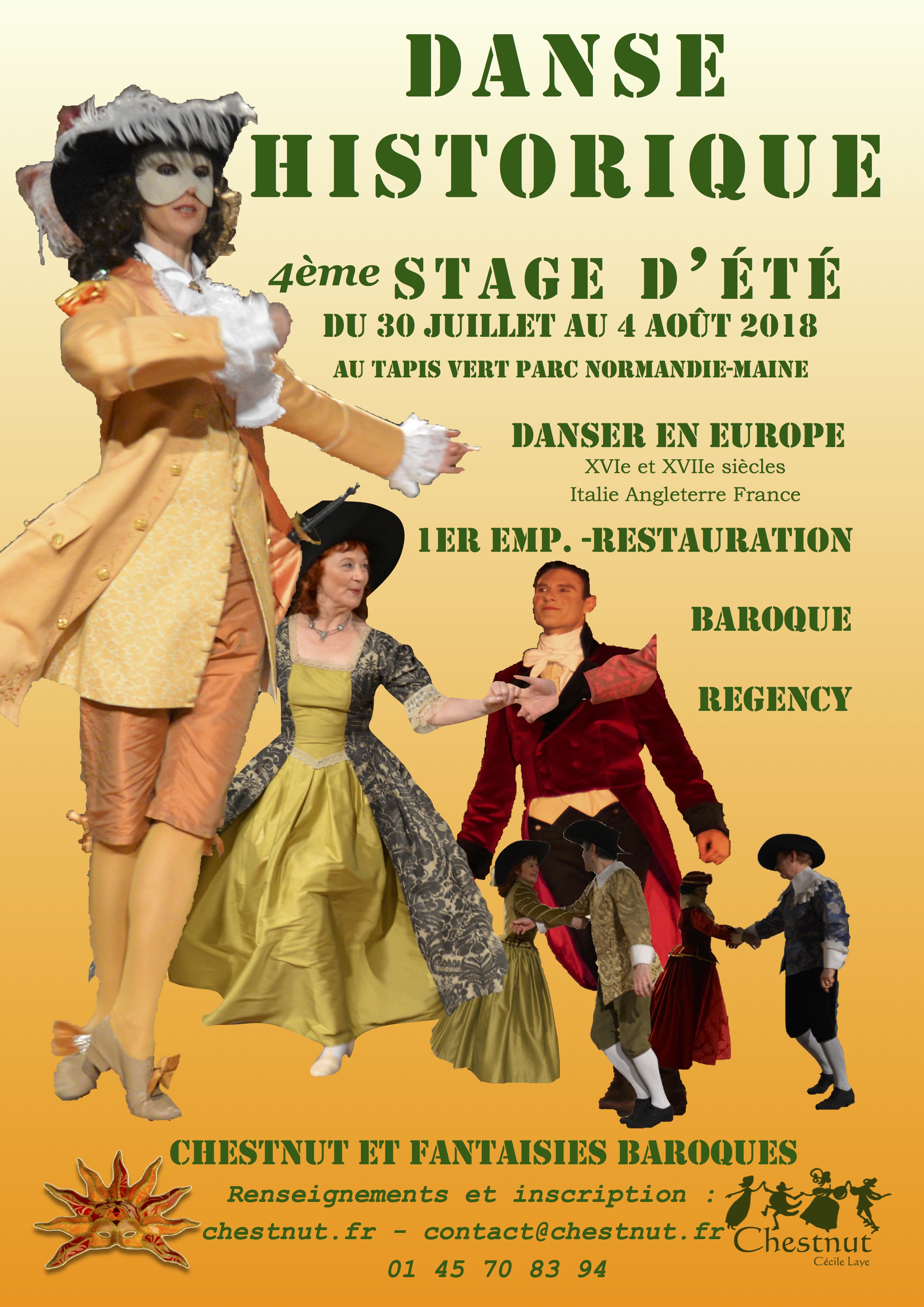
by Chestnut & Fantaisies Baroques

Chestnut and Fantaisies Baroques welcome you from July 30 to August 4, 2018 to their fourth summer school of period dances in Normandy.
- Dancing in Europe during the end of the 16th and the beginning of the 17th centuries (Italian, French and English tradition)
- Baroque dances
- Jane Austen & Regency dances
- French 1rst Empire - Restauration dances
With four different subjects and two instructors (Cécile Laye and Irène Feste), you’ll be able to make up your own schedule according to your tastes and how energetic you feel. You may opt for an intensive dance programme, up to 6 hours daily, or choose a mix of workshops and time for resting or for touring the area.
In our workshops, the programme allows for all levels of dancing. Each dancer will be taught variations suitable to his/her possibilities.Each day will start at 9 a.m. with a half hour of warming up exercises, led by each instructor in turn.
WORKSHOP DESCRIPTION
MORNING :
- Dancing in Europe during the end of the 16th and the beginning of the 17th centuries through the Italian, French and English traditions workshop (3h : 9h45-12h45): Cécile Laye, The workshop will cover several modern dances. The focus will be on squares for two couples and dances including one or several heys. France: Les Bouffons, out of Thoinot Arbeau’s Ochésographie (1588), first and third passages. Italy: Bizarria d'Amore, choreographed by Cesare Negri and published in his 1602 book, Le Gratie d'Amore. England: Hit and Miss and Parson's Farewell, dances known at the time of Elisabeth 1st and James 1st, collected by the London publisher John Playford in the 1651 edition of The English Dancing Master.
or
- Baroque dances workshop (3 hours: 9:45-12:45): Irène Feste, La Lorraine de Balon, ball dance for one man and one woman, composed on a rigaudon de Provence music. This dance appears in the XVIIth Recueil de danses pour l’année 1719.
AFTERNOON :
- Jane Austen's and Regency dances workshop (1h30 : 15h/16h30 or 17h/18h30 on alternate days): Cécile Laye, Some figures were kept through English 17th and 18th century dances, from circles for eight to cotillon, with Newcastle (John Playford,1651) and La Nouvelle Promenade (James Fishar,1775). We’ll see the use of perpendicular lines in both these dances – they also occur in many choreographies of the period. The workshop will include a proposal for stepping in a longways duple minor set. At the start of the 19th century it became fashionable to use traditional Scottish and Irish steps in longways for as many as will while the figures in longways became much simpler than in earlier times. The stepping proposed will be based on Countess of Yarmouth's Fancy (Alexander Wells, 1800)
and
- French 1rst Empire - Restauration workshop (1h30 : 15h-16h30 or 17h-18h30 on alternate day): Irène Feste, The Mazurka arranged by Saint Léon for H.R.A. Prince Charles of Württemberg and the Allemande created for the three princesses. These dances made up by Michel Saint Léon, whose son was Arthur Saint Léon, the famous dancer, were meant for the princes and princesses of the Württemberg house to improve their education and enable them to dance at the court balls. During the first third of the 19th century Mazurka was quite fashionable in all great European salons. L’Allemande à trois consists in a series of interweaving movements and figures for which we could make up names, such as arches, rosette, revolving around the sun…
EVENING ACTIVITIES
Evening entertaiment will be organized for trainees and instructors to share a good time:
- Tuesday: team quizz on period dances
- Wednesday: films
- Thursday: will be decided by trainees
- Friday : Costume Ball including the dances studied in the workshops. (Please note: costume is not a must.)
TEACHERS

Cécile Laye studied historical dances in England with Dolmetsch Historical Dance Society, Nonsuch History and Dance and EFDSS (English folk Dance and Song Society). She studied in particular with famous teachers or researchers such as Anne Daye, Anne Cottis, Peggy Dixon, Ethyl Anderson, Marjorie Fennessy, Tom Cook and Alan Davies. In France, she studied under Francine Lancelot, Andréa Francalancci and Barbara Sparti. In 1998 she founded the CHESTNUT company to make available the repertoire of figure dances of the time of the Stuarts and the English inheritance, from a literary and historical point of view, in collaboration with musicians, dancers, actors, singers, horse riders and fencers. She also graduated from Cours Florent in acting and staging.

After a diploma in ballet dancing, Irène Feste studied « Belle Dance » with L’Eclat des Muses, a company led by Christine Bayle. In 2007, she founded her own company with Pierre-François Dollé: Fantaisies Baroques. They design and perform dance/theatre shows in schools and music schools. Irène Feste specialises in baroque and Premier Empire (Napoleonic time) dances, her two main fields of research. She regularly dances with compagnie Divertimenty.
VENUE
Le Tapis Vert, a residence for artists nestling in a large estate in the Normandie-Maine park, offers several accommodation possibilities on site, from boarding-house to rented rooms and camping. Also on site, two superb halls for activities and a circus tent make for a high quality environment.


FEES
Tuition prices (€/pers.) :
1 hour 30 Module : €125
- French 1rst Empire - Restauration (1h30 in the afternoon)
- Jane Austen & Regency dances (1h30 in the afternoon)
3 hours Module : €216
- Baroque dances (3 hours in the morning)
- Dancing in Europe 16th & 17th centuries (3 hours in the morning)
- French 1rst Empire - Restauration + Jane Austen & Regency dances (2 x 1h30 in the afternoon)
4 hours 30 Module : €288
- Baroque dances (3 hours in the morning) + French 1rst Empire - Restauration or Jane Austen & Regency dances (2 x 1h30 in the afternoon)
- Dancing in Europe 16th & 17th centuries (3 hours in the morning) + French 1rst Empire - Restauration or Jane Austen & Regency dances (2 x 1h30 in the afternoon)
6 hours Module: €336
- Baroque dances (3 hours in the morning) + French 1rst Empire - Restauration and Jane Austen & Regency dances (2 x 1h30 in the afternoon)
- Dancing in Europe 16th & 17th centuries (3 hours in the morning) +French 1rst Empire - Restauration and Jane Austen & Regency dances (2 x 1h30 in the afternoon)
Accommodation and meals prices (€/pers.) : see them on chestnut.fr
Please, note : before you fill in your registration form,please check with us calling 0033 6 60 22 23 21 to find out which type of accommodation is still available.HOW TO GET THERE
Reaching Tapis Vert
- By car
Le Tapis vert is 200 km away from Paris and 130 km away from Rennes.
- By train
The nearest train station is Alençon, reached either through Surdon from Paris Montparnasse-Vaugirard or by TGV through Le Mans. Share taxi or car from Alençon station.
A shuttle will be organized to fetch the trainees arrived at the station of Alençon by the train of 4:07 pm. Thank you for indicating us that you will arrive by the train.TRAINEES’ WELCOME
Trainees are welcome from 17:00 on Monday July 30, 2018.
Please note : as no evening meal is provided on the first day evening (Monday), please bring a picnic dinner !
Departure on Saturday, August 4 after breakfast.
REGISTRATION
Please note : before you fill in your registration form, please check with us calling 0033 6 60 22 23 21 or contacting us at contact@chestnut.fr to find out which type of accommodation is still available.
Registration form here
Payment from abroad : please contact us
CONTACT- INFORMATION
contact@chestnut.fr ou 0033 6 60 22 23 21
- Workshop
- Summer School
- Course
- Renaissance
- Cinquecento
- French Renaissance
- Baroque
- Playford
- 19th century
- Quadrilles
- Regency
- All levels
L’Arte del Ballare
Die Tanzkunst im 15. Jahrhundert Mit Lieven Baert, Gent
Einige italienische Tanzmeister wie Da Piacenza, Ebreo und Cornazano haben uns verschiedene Manuskripte mit Tanztheorie und Choreographien hinterlassen.
Sie sprechen darin alle über „die KUNST zu Tanzen“ und erwarten von den Ausführenden den Regeln der Musikalität, der Schrittgenauigkeit und
rhythmischen Perfektion, der Eleganz und des Ausdrucks oder der Dynamik zu folgen.
Die Musik ist vielschichtig (mehr sogar als in den folgenden Jahrhunderten) und man benötigt ein gutes musikalisches Bewusstsein und Konzentration, um die Choreographien mit ihrem ganzen Potential auszuführen.
Dieser Kurs legt seinen Schwerpunkt auf Tanztechnik und Stil des Quattrocento mit einem hohen Niveau!
Schwierigkeitsgrad: Geeignet für alle Tänzer mit einer guten Basis bei Balli und Bassadanze des Quattrocento. Kenntnis der Basisschritte der vier Misure (Bassdanza, Quadernaria, Saltarello, Piva) wird vorausgesetzt.
15. und 16. September 2018
Katholisches Jugendheim Oberwesel, Martinsberg 3
Stadthalle Oberwesel
Samstag 9:30 – 12:30 und 13:30 – 17:00 Uhr
Sonntag 9:30 – 12 .30 und 13:30 – 16:00 Uhr
Teilnahmegebühr: 75,00 Euro
Träger der Veranstaltung: Katholische Erwachsenenbildung im Bistum Trier,
Fachstelle Bad Kreuznach Bildungswerk Oberwesel
Anmeldung bis 15. August 2018 per E-Mail an:
Susanne Janning
Münsterstraße 14
D-55116 Mainz
Tel.: 0049 (0)6131 / 233375
Und gleichzeitiger Überweisung der Teilnahmegebühr auf das Konto
des Bildungswerks Oberwesel
BIC: MALADE51SIM
IBAN: DE34 5605 1790 0002 2000 20
Es sind Kaffeepausen vorgesehen. Getränke sind vorhanden.
Gemeinsames Mittagessen: jeder, der möchte, kann gerne etwas für unser kleines Buffet mitbringen (zum Beispiel: Salate, Brot,
hartgekochte Eier, Gemüsesticks, Würstchen, Käse, Kuchen etc.). So bekommen wir meistens ein leckeres Buffet für alle zusammen.
- Workshop
- Renaissance
- Quattrocento
Tanzgruppe Rossina
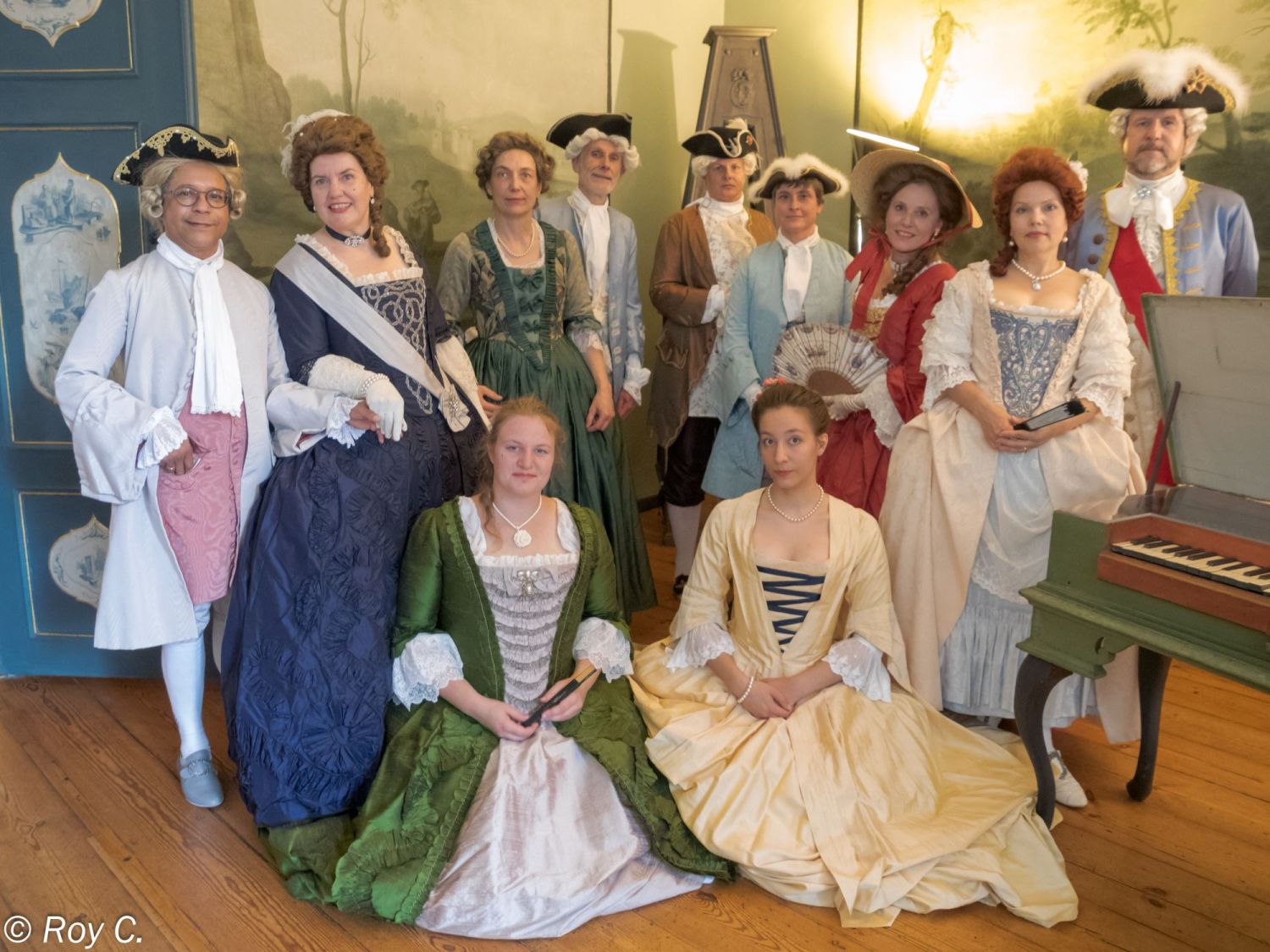
Tanzensemble ROSSINA in Hamburg, geleitet von Birte Hoffmann-Cabenda,wurde 1982 gegründet Die Gruppe ist altersmäßig gemischt. Neue Mitglieder sind uns stets willkommen.
- Dance group
- Renaissance
- Baroque
- 19th century
Firlitanz
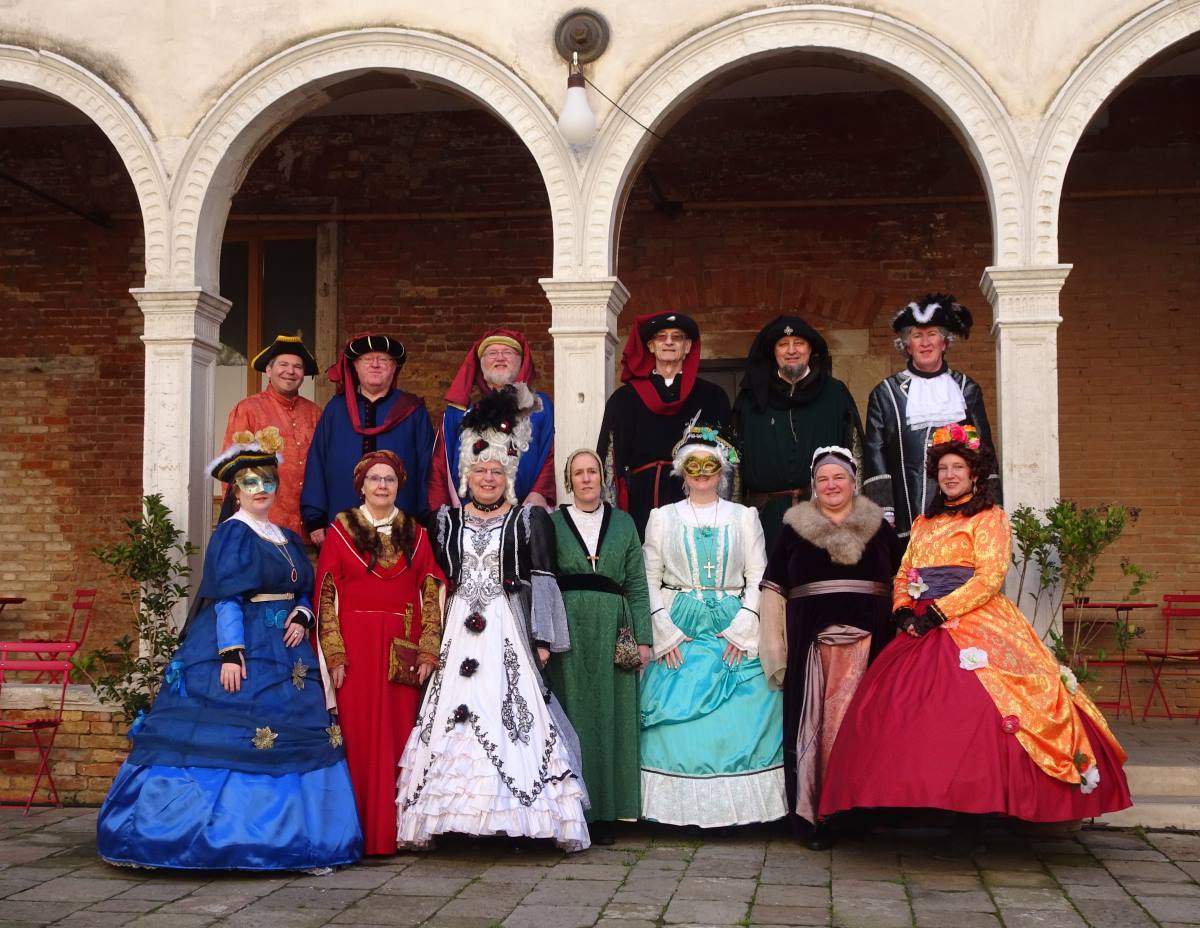
Firlitanz, die historische Tanz- und Musikgruppe aus Soest, entstand 2011, als eine große Gruppe der Soester Mittelalterfreunde einen Kontrapunkt zu den ansonsten vor allem von Militär und Lagerleben geprägten Aktivitäten setzen wollte. Später kam noch Musica Firlitanz hinzu, so dass die Tanzgruppe nicht mehr nur auf "Konservenmusik" angewiesen war.
Heute sind ca. 30 Personen dabei, wobei 16 bis 20 von ihnen den harten Kern bilden und regelmäßig an den offenen und kostenlosen Proben teilnehmen (jeden Dienstag, s. a. Termine), ebenso wie an den zahlreichen Auftritten im Jahr.
Schwerpunkte sind Reigentänze und höfische Tänze aus dem Mittelalter und der Frührenaissance. Diese werden dem Publikum nicht nur bei Stadtfesten in der Region präsentiert, sondern auch in Soests Partnerstädten (u. a. in Polen und Schweden), sowie während der Westfälischen und Internationalen Hansetage.
Der bisherige Höhepunkt war allerdings die offizielle Einladung zum Karneval in Venedig 2018, wo Firlitanz bei der Eröffnungsveranstatung sogar einen Tanz vor 'zigtausend Zuschauern auf dem Markusplatz vorführen durfte.
- Costumes
- Dance group
- Medieval
- Renaissance
Galabal hofdansvereniging Plaisir Courtois
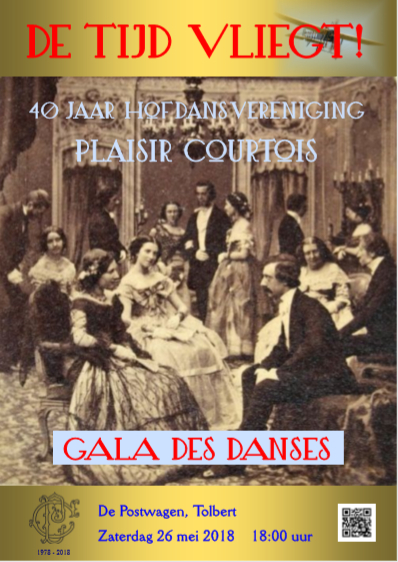
Plaisir Courtois celebrates her 40th anniversary with a gala-ball. There is a possibility to practice in the afternoon. Dinner is included.
We hope to see you there!
Tickets are available on www.plaisircourtois.nl/lustrum
- Ball
- Renaissance
- Playford
- 19th century
- mixed
- All levels
De Tijd Vliegt
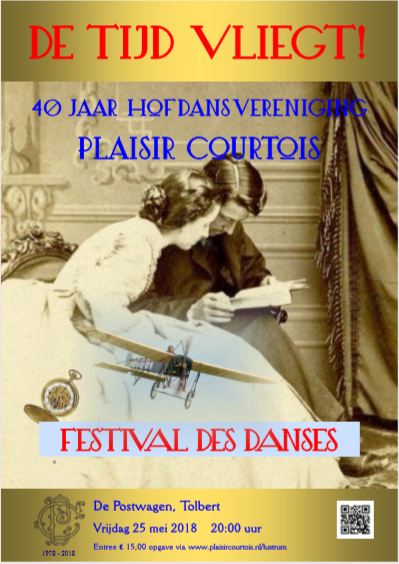
Plaisir Courtois celebrates her 40th anniversary with a special performance. We will travel through time starting in the 16th century and ending in the early 20th century. We work together with several other historical dance-groups from the Netherlands. We hope to see you there!
Tickets are available on www.plaisircourtois.nl/lustrum
- Performance
- Renaissance
- Baroque
- 19th century
- mixed
HDS Annual Summer School 2018 - Masque Dance and Music at the Jacobean Court
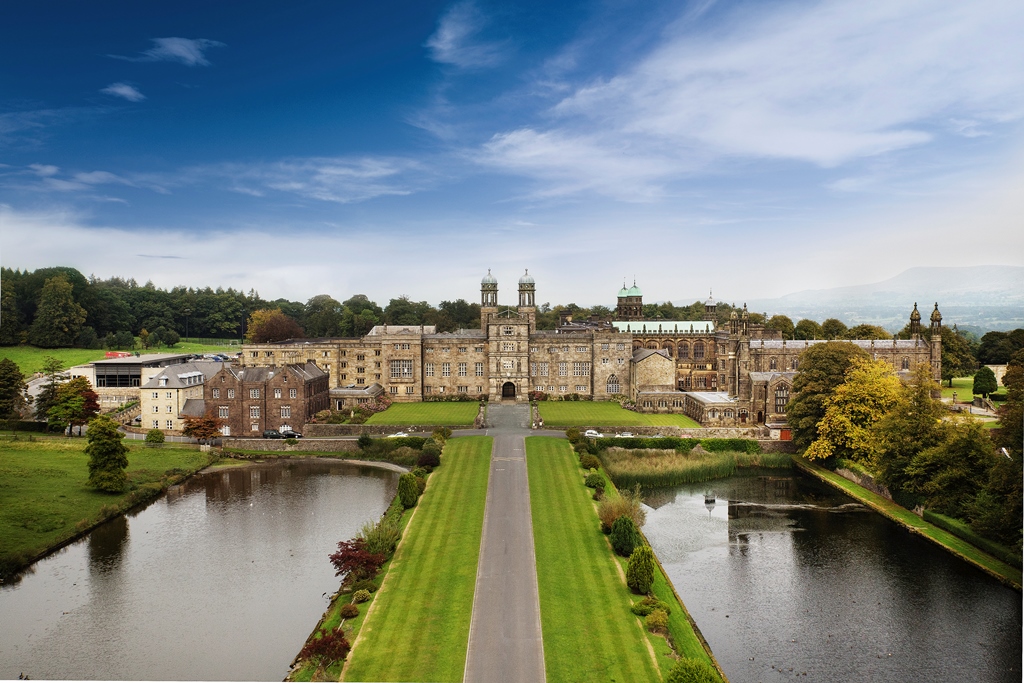
The annual HDS summer school this features The Lords Masque of 1613: an exploration of performance in dance and music, led by specialist tutors. There are dance coures and a musician's course.
It takes place at Stonyhurst College, near Preston in England from 5th - 12th August, and is a special opportunity to gain insight into the realization of Campion's text and the surviving music.
- Summer School
- Renaissance
- Beginner
- Intermediates
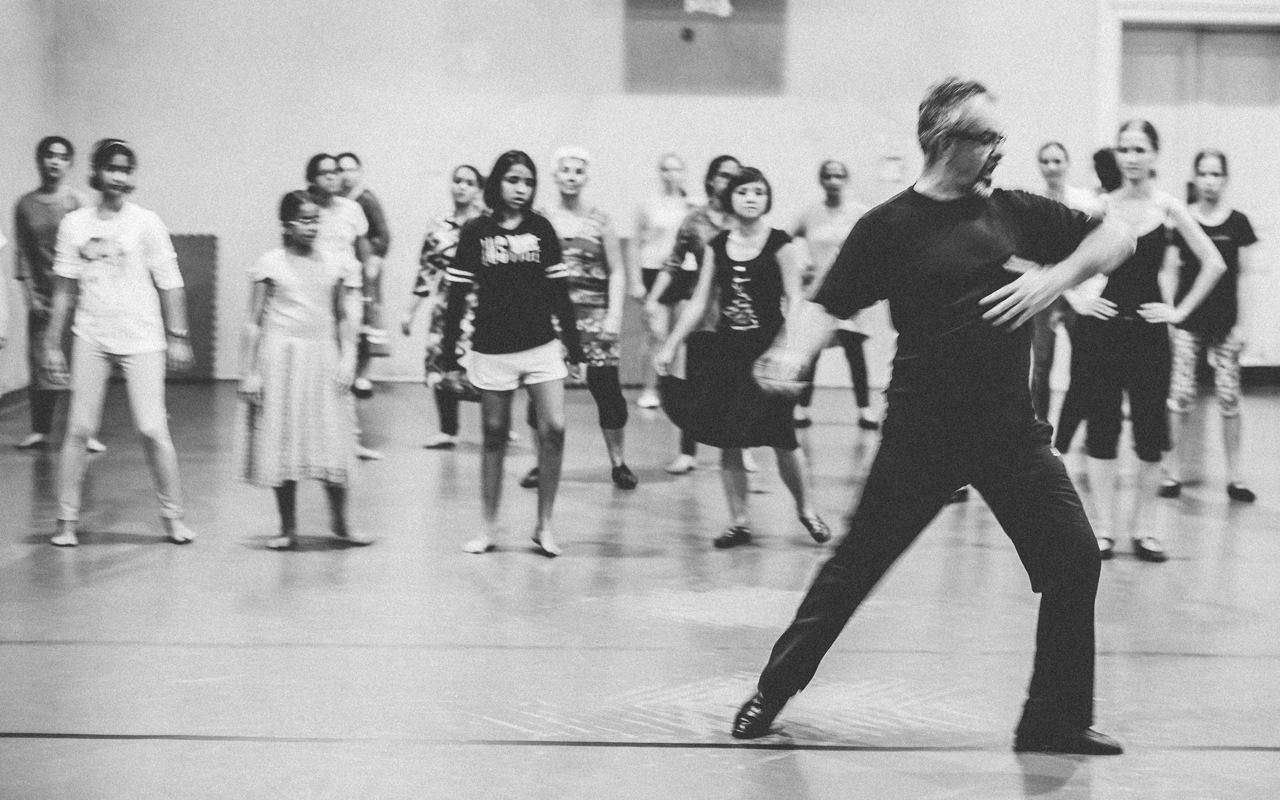
Krakow dances. Workshops full of surprises! - Registration for workshops during 19th Cracovia Danza Court Dance Festival
- Workshop
- Renaissance
- Commedia dell'Arte
- Baroque
- Spanish baroque
- mixed
- All levels
Masque Dance and Music at the Jacobean Court
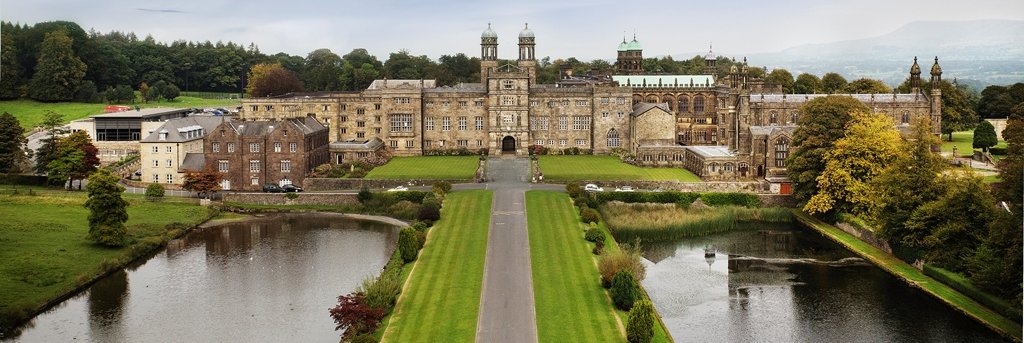
This is a very special opportunity to enjoy and understand how a Jacobean masque functions, through a recreation of The Lords’ Masque, written by Thomas Campion for the nuptials of Elizabeth, Princess of England and First Lady of Scotland, the daughter of James I, on 14th February, 1613. The team of tutors has experience and expertise in the recreation of Stuart masques (the English ballet de cour), bringing to life the texts with the dance and music that were the heart of a masque.
A short course option from Sunday to Wednesday morning is available, offering an excellent grounding in dance or music, and an introduction to masque elements, concluding with a festive Jacobean revel on Tuesday evening.
The Courses
Delegates choose either the dance or the music route, spending the mornings in technique classes with their chosen tutor.
Afternoon sessions will feature an exciting range of workshops focusing on elements of the masque: music, song, rhetorical gesture and speech; antimasque (dances of character and action), torchbearers’ dances and main masque dances by courtiers. Wednesday afternoon will be free ‒ a chance to explore the beautiful grounds of the venue and the surrounding countryside and villages. Evening talks and activities will deepen understanding of masque performance.
During the first two days, all students will have the chance to explore elements of a Jacobean masque. Rehearsals specifically for The Lords’ Masque will take place during the final four days, culminating in the performance on Saturday night.
The Dance Courses
Morning classes are offered at three levels of experience, so that students can develop skill and understanding with their chosen tutor at their own ability level. The classes will develop technique and repertoire for the social revels of the masque, and a foundation for the invented dances. The repertoire will introduce the riches of Jacobean court dancing, drawing on English, Italian and French sources of the time.

Intermediate/Advanced Dance Class with Dr Anne Daye
For dancers experienced in late Renaissance dance, exploring Italian balletti and improvisation.
Anne is a leading researcher in the dance and performance of the Stuart masque, integrating deep understanding of Renaissance court dance with study of masque texts and related sources. Her teaching experience is extensive, and Anne has published major studies on Tudor and Stuart court masquing.

Elementary/Intermediate Dance Class with Hazel Dennison
For dancers wishing to build upon existing skills to obtain a greater range of dexterity and expression in the performance of Italian balletti.
Hazel draws upon a diverse practice of dance, drama and theatre studies through production, performance, research and conference. She teaches and choreographs summer schools, workshops and heritage programmes, and has co-produced the CD and booklet Ballare et Danzare, on fifteenth-century dance. She is currently working on a choreographic perspective of Domenico da Piacenza.

Basic Dance Class with Charlotte Ewart
For non-dancers and newcomers to Renaissance dance, a chance to learn the basics of early-seventeenth-century dancing, such as pavans, almains, courantes, galliards and lavoltas.
Charlotte is a teacher, dancer and researcher of historical dance particularly focusing on dance and movement in the medieval and Renaissance periods. Her dance MA investigated authenticity in recreating dances from the past. She is currently Associate Artist for the Historic Royal Palaces.
Afternoon sessions will focus on elements of the masque: music, song, rhetorical gesture and speech; antimasque (dances of character and action), torchbearers’ dances and main masque dances by courtiers.
During the first two days, all students will have the chance to explore elements of a Jacobean masque. Rehearsals specifically for The Lords’ Masque will take place during the final four days, culminating in the performance on Saturday night.
The Music Course with Tamsin Lewis
 The original performance of The Lords’ Masque in 1613 was a spectacular musical event. The accounts for the masque include ‘42 musitians, 10 of ye kings violins and 2 that plaied to ye Antick Maske’. To reconstruct the masque with its songs, choruses, dances and incidental music by other composers, we are especially looking for string players (viol, Renaissance violin, lute, cittern, bandora, harp), a flute player and singers, but others will be welcome. We will have the use of a large music room for morning sessions; afternoon sessions will be integrated with masquing activities.
Tamsin studied violin at the Florence Conservatoire and has been playing for early dance for more than 20 years. A specialist in early modern English music, she directs the ensemble Passamezzo, and has written, arranged, directed and played music for many theatre productions, as well as publishing many music books.
Fees
- Full course: £575 (Sun 5th to Sun 12th August, depart after breakfast)
- Short course: £250 (Sun 5th to Wed 8th August, depart after breakfast)
Bursaries
HDS offers a number of full and part bursaries for appropriate candidates. Early application is advisable; apply by email to bursaries@historicaldance.org.uk by 6th January 2018. The HDS committee will also consider later applications received by 30th April 2018.
Further information and booking
- Leaflet with full details of location, accommodation and fees (pdf)
- Booking form (pdf) if booking by post or paying by cheque
- On-line booking form for payments by credit/debit card or PayPal
(Source http://historicaldance.org.uk/summerschool/year2018)
- Summer School
- Renaissance
- Cinquecento